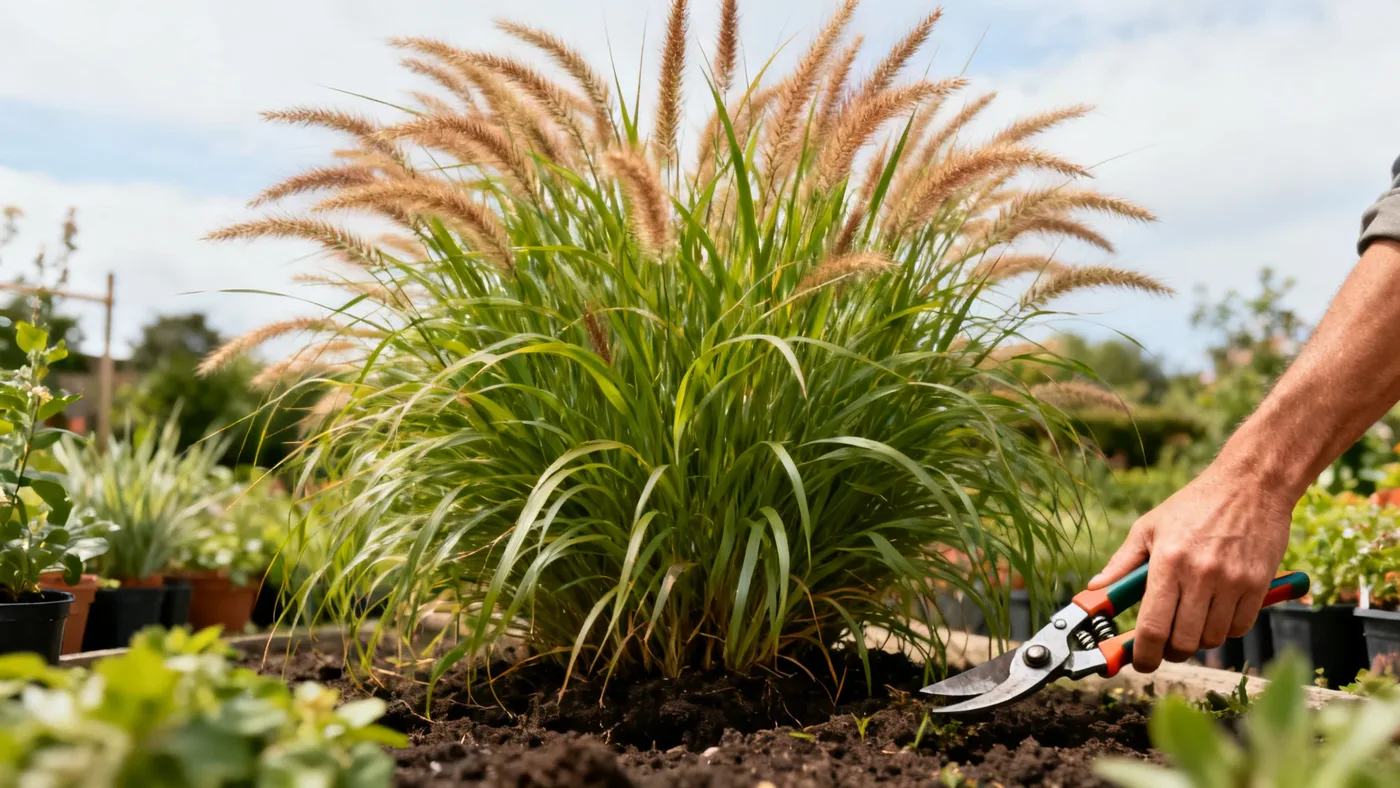
When and How to Cut Back Hameln Fountain Grass
Hameln Fountain Grass needs one essential pruning job each year: cutting back the old growth in late winter. This is not optional, and the timing matters. Cut too early and you lose the winter texture that makes this grass valuable in the landscape. Wait too long and new growth tangles with dead foliage, making the job harder and stressing the plant.
Once you understand the timing and technique, cutting back Hameln Fountain Grass takes less than an hour for an established clump and leaves you with a clean slate for spring growth.
Why Cut Back Hameln Fountain Grass Every Year
Hameln Fountain Grass is a warm-season herbaceous perennial. Unlike evergreen plants, it dies back completely each winter. The dried foliage and seed plumes turn golden tan to russet and provide winter interest through the cold months. Come spring, the plant needs that old growth removed so new shoots can emerge without obstruction.
Cutting back also prevents disease and pest problems. Dead foliage trapped against new growth creates a humid microclimate where fungal issues take hold. A clean cut removes any overwintered pests and gives the plant a vigorous restart.
Left uncut, Hameln Fountain Grass will still grow back, but the clump becomes dense and tangled at the base. The plant's performance declines over time if pruning is skipped year after year.
When to Cut Back: Timing Is Critical
The rule is simple: cut back Hameln Fountain Grass in late winter to early spring, before new growth emerges. In USDA zones 5-9, this typically means February through early April, depending on how far north you are and when warm weather arrives in your region.
Do not cut back in fall. This is the most common mistake. The dried foliage and tan plumes provide valuable winter texture and appeal. More importantly, cutting back in fall exposes tender new growth to frost, which can injure or kill the plant. The dried growth left standing also offers habitat for beneficial insects and seed for overwintering birds.
Watch for the first signs of new growth at the base of the clump. When you see pale green shoots emerging from the soil line, you have about one to two weeks before you need to cut. If you wait until new growth is several inches tall, you risk cutting off young shoots along with the old foliage.
In mild-winter areas, this window might arrive as early as late January. In cold regions, late March or early April is more realistic. Check your local weather and your plant's growth stage, not the calendar.
What You'll Need
Cutting back Hameln Fountain Grass does not require fancy equipment. Gather these materials before you start:
- Hedge shears or electric hedge trimmer (for efficiency on larger clumps)
- Bypass pruners (for any thick stems missed by shears)
- Heavy-duty work gloves (the blades are sharp and leaves have fine edges)
- Safety glasses (dried foliage particles fly during cutting)
- A tarp, sheet, or collection bin (to gather clippings)
- A light rope (optional, to bundle the clump tightly before cutting)
Hedge shears work fastest for most gardeners. Electric hedge trimmers speed up the job on very large or multiple clumps. Avoid chainsaws or string trimmers, which tear the plant unevenly.
Step-by-Step: How to Cut Back Hameln Fountain Grass
Step 1: Inspect and Clear Around the Clump
Walk around your plant and check for any branches, debris, or nearby plants that might interfere. Remove garden stakes, tomato cages, or other structures nearby. Clear fallen leaves or mulch away from the base of the clump so you can see where the plant meets the soil.
Step 2: Assess the Size and Growth Pattern
A mature Hameln Fountain Grass clump reaches 18-24 inches wide and 18-24 inches tall (foliage only, without the seed plumes). If your plant is significantly larger, it may benefit from division, but don't worry about that during cutting.
Look at how the foliage grows. The arching blades form a dense mound. Some gardeners find it helpful to loosely tie the clump together with a soft rope before cutting, which keeps pieces from spreading everywhere. This step is optional but makes cleanup easier.
Step 3: Cut to 3-4 Inches Above Ground
This is the single most important measurement. Cut all the foliage back to 3-4 inches above ground level. Use your hedge shears to make a horizontal cut across the top of the clump, then work around the perimeter to catch any stray stems.
Cutting too low (flush with the ground) risks damaging new growth buds at the soil line. Cutting too high leaves stubble that looks messy and wastes the plant's energy pushing back up into that dead tissue. Three to four inches is the sweet spot.
Work steadily. The job is easier if you cut in one direction, pause, then cut from the opposite side. Step back occasionally to check your progress and make sure the remaining stubble is even.
Step 4: Remove Thick Stems
Hedge shears handle most of the foliage quickly, but you may find a few thicker stems at the base that need bypass pruners to cut cleanly. Make a single, sharp cut rather than crushing the stem. This prevents damage to adjacent tissue.
Step 5: Collect and Dispose of Clippings
Gather the cut foliage into a pile. If you used a tarp, bundle it closed. Dried fountain grass clippings are lightweight, so wind can scatter them. Compost the material if your compost system accepts it, or place it in a yard-waste bin. Do not leave clippings on the ground around the plant, as they can harbor pests over the growing season.
Step 6: Clean Up Around the Base
Once cutting is done, gently clear away any small debris, dead leaves, or mulch from the very base of the plant and the exposed stubble. This helps light and air reach the crown, encouraging healthy new growth. You do not need to disturb the soil.
Tips for Success
Sharp tools make the job faster and cleaner. Dull shears tear foliage instead of cutting it, which looks ragged and increases disease risk. Sharpen or replace hedge shear blades at the start of each season.
Wear heavy gloves and eye protection. Hameln Fountain Grass has fine, arching blades that are surprisingly sharp when dry. Dried foliage fragments can irritate skin and eyes.
If you have multiple clumps to cut, prioritize the ones in full sun first. These tend to begin growth earliest in spring and have the narrowest cutting window.
Work on a dry day. Wet foliage is heavier, slippery, and harder to cut cleanly. Wait a day after rain if possible.
If you miss the spring window and new growth is already several inches tall, you can still cut back, but do it carefully. Avoid cutting into the green shoots. Remove only the tan, dried foliage, and leave the new growth to continue upward.
Common Mistakes to Avoid
Cutting in fall: This is the biggest mistake. Leave the dried foliage standing through winter. It provides landscape interest, protects the crown, and offers habitat for wildlife.
Cutting too low: Shearing the plant flush to the ground damages the growing crown and can kill young buds. The 3-4 inch guideline is not arbitrary; it protects the plant's vital tissues.
Waiting too long into spring: Once new green growth reaches 4-6 inches, cutting becomes risky. You may accidentally remove or damage the vigorous new shoots you want to keep.
Using the wrong tools: String trimmers, chainsaws, and weed whackers shred the foliage unevenly. Hedge shears or pruners give clean cuts that heal faster.
Leaving clippings around the plant: Piled-up dead foliage creates a mulch that traps moisture and encourages fungal issues. Clear it away completely.
Fertilizing right after cutting: Wait at least two weeks after cutting before applying fertilizer. The plant is still settling and does not need a growth boost immediately. A balanced fertilizer in spring is sufficient; avoid over-fertilizing, which causes floppy growth.
What to Expect After Cutting
Immediately after cutting, your plant looks stubborn and reduced to a low mound of tan stubble. This is normal. Do not assume you've damaged it.
Within one to two weeks of cutting (longer if the weather is still cold), new green shoots will emerge from the base. These shoots grow quickly and soon become the fine-textured, arching foliage Hameln Fountain Grass is known for. By early summer, your plant will be full and attractive again.
Bloom plumes appear mid to late summer (roughly July-October, depending on your zone). The plumes start as creamy white to light pink bottlebrush-like forms and age to buff or tan as they mature. The blooms provide color and texture through fall before the foliage again turns golden.
A mature clump typically reaches full size within 2-3 growing seasons from a small nursery plant. Once established, Hameln Fountain Grass requires only this annual cut-back. The plant can remain vigorous for 4-6 or more years before division becomes necessary. Division (splitting the clump in early spring) is recommended if the center dies out or growth declines significantly.
For care details beyond cutting, see our complete growing guide to Hameln Fountain Grass care.
Quick Reference: Cutting Back Checklist
| Task | Details |
|---|---|
| When to cut | Late winter to early spring, before new growth emerges (February to early April in most zones 5-9) |
| When NOT to cut | Fall or early winter. Leave standing for winter interest. |
| How short | Cut to 3-4 inches above ground. Never cut flush to soil. |
| Tools needed | Hedge shears or electric hedge trimmer, bypass pruners, heavy-duty gloves, safety glasses |
| Clump size | Mature plant: 18-24 inches wide and tall (without plumes) |
| Time to regrow | New green shoots within 1-2 weeks; full foliage by early summer |
| Bloom timing | Plumes appear mid to late summer (July-October) |
| Fertilize | Wait 2 weeks after cutting; apply balanced fertilizer in spring only |
| Lifespan before division | Typically 4-6+ vigorous years before needing division |