Hameln Fountain Grass Spacing for Borders, Hedges and Mass Plantings
Getting Hameln fountain grass spacing right is one of the easiest ways to create a landscape that looks intentional from year one. Whether you're designing a border edge, building a low hedge, or filling a large area with a drift, the distance between plants determines how quickly your planting fills in and how balanced it looks as the clumps mature. This guide walks you through the exact spacing formulas, the reasoning behind them, and how to avoid the most common spacing mistakes.
Why Spacing Matters for Fountain Grass
Hameln fountain grass reaches 18 to 24 inches wide at maturity, which happens over about 2 to 3 growing seasons. If you crowd plants too close together, they'll compete for water, nutrients, and light long before they reach full size. If you space them too far apart, you'll have bare soil gaps for two or three seasons while the clumps fill in. The right spacing keeps plants healthy and creates a cohesive visual effect as soon as possible without overcrowding.
The spacing you choose depends on your goal. A border that hugs the edge of a bed has different needs than a mass planting meant to cover a slope or create a focal point in a mixed perennial garden. Hedge-style plantings require tighter spacing to achieve that dense, unified look.
Understanding Hameln Fountain Grass Mature Size
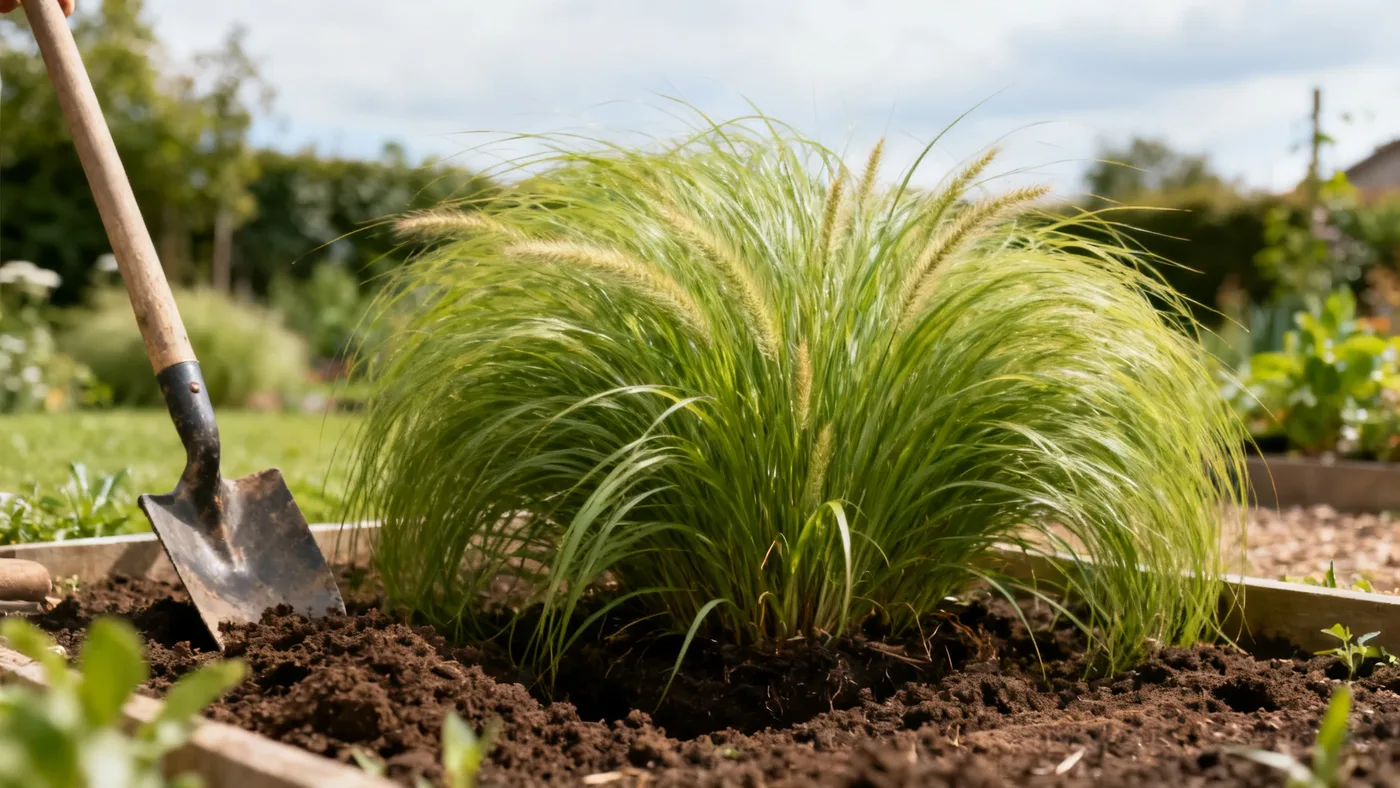
Before you mark out holes, understand what you're working with. Hameln fountain grass is a compact cultivar. The foliage mound itself grows 18 to 24 inches wide, and when the plant blooms in mid to late summer, the plumes add another 6 inches of height, bringing total plant height to 24 to 30 inches. This is smaller than most fountain grass varieties, which makes it ideal for borders and containers, but you still need to respect its mature dimensions when spacing.
The moderate growth rate means each clump fills out gradually. A quart-size container plant from the nursery will take 2 to 3 growing seasons to reach its mature clump size. This is normal and expected. The plant isn't slow, it's just building a solid foundation underground before it expands above ground.
Spacing Guidelines for Borders
Border plantings are typically one or two rows deep along a garden edge or walkway. In a single-row border, space plants 18 to 24 inches apart. The closer spacing (18 inches) works well if you want the plants to knit together faster or if you prefer a more densely textured edge. The wider spacing (24 inches) gives each plant more room and creates a more deliberate, spaced-out effect that lets you see each clump as an individual accent.
For a two-row staggered border, where plants are offset so the back row fills gaps in the front, keep the same 18 to 24 inch spacing within each row. Offset the back row so its plants fall roughly halfway between the front row plants. This creates a much fuller appearance and speeds up the fill-in time. A two-row border at 24 inches per row will look thick and continuous within one growing season.
Borders benefit from full sun to light shade, though full sun produces the most compact, upright habit and the best bloom. If your border gets afternoon shade, plant on the closer end (18 inches) to account for slightly looser, more open growth in less light.
Spacing Guidelines for Hedges
Hameln fountain grass doesn't form a traditional hedge in the sense of a sheared, formal barrier. Instead, it creates a living edge or screen when planted densely. To achieve hedge-style coverage, use 18 inch spacing minimum, and consider 15 inches if you want a very full, dense look within 2 years. The closer spacing trades initial cost for faster visual impact and a more unified wall of foliage.
For a hedge-style planting, make sure plants are in full sun so they develop the compact, upright habit that gives the best screen effect. Part shade will result in a looser, more open structure that undermines the hedge aesthetic. Consistent moisture during the establishment phase (the first growing season) helps plants build sturdy crowns and root systems that support dense foliage.
Plan for 18 to 24 inches in height as well. A hedge of Hameln fountain grass is a relatively low screen, suitable for lining a path, defining a garden room edge, or softening the base of taller structures. It's not a windbreak or privacy screen, but it's an elegant, low-maintenance alternative to formal hedges.
Spacing Guidelines for Mass Plantings
Mass plantings and drifts can absorb wider spacing because the goal is ground coverage and visual flow rather than a formal edge. Plant Hameln fountain grass 18 to 24 inches apart in drifts, using the wider spacing (24 inches) if budget or space is limited. In a large area where you're planting 50 or 100 clumps, 24 inch spacing costs less upfront and still produces a cohesive, filled-in look within 3 years.
In mass plantings, use odd-numbered groupings (3, 5, 7, or 9 plants) arranged in staggered rows or informal clusters rather than rigid grids. This mimics natural plant communities and looks more intentional than equally spaced rows. Stagger the rows by half the spacing distance so plants in adjacent rows don't align vertically. This creates better visual flow and allows light to filter through without creating obvious sight lines.
For a naturalized slope planting, mass spacing works especially well because the irregular terrain already breaks up the visual grid. Space plants 18 to 24 inches apart along contour lines, and they'll blend with the slope's topography while providing erosion control and textural interest through fall and winter.
Step-by-Step Planting Process
What You'll Need: measuring tape, wooden stakes or string, a spade or planting auger, soil amendment (optional but beneficial), mulch, and water source.
- Measure and mark planting locations. Lay out your spacing using a measuring tape and wooden stakes. For borders, drive stakes in a straight line at your chosen spacing (18, 20, or 24 inches). For mass plantings, mark staggered rows using stakes and string to create a visual grid, then offset every other row by half the spacing distance. Taking 5 minutes to mark prevents planting too close by eye.
- Prepare the bed. Clear weeds and large debris from the area. Hameln fountain grass adapts to most well-drained soils, but it appreciates soil that isn't compacted. If you're planting into heavy clay or depleted soil, work in 2 to 3 inches of compost or aged bark to loosen the soil and improve drainage. Don't overdo fertilizer at planting time; a light touch is better than rich soil, which encourages floppy growth.
- Dig planting holes. Dig a hole slightly larger than the nursery container. Most Hameln fountain grass plants are sold in quart or #1 containers. The hole should be deep enough that the top of the rootball is level with the ground, not buried. Planting too deep invites rot; planting too shallow leaves roots exposed.
- Remove the plant from its container and loosen roots. Gently tip the container and slide the plant out. If the roots are densely spiraled or matted, use your fingers or a small tool to loosen them. A few cuts or teasing apart the outer roots helps them establish faster in the surrounding soil. Don't be rough, but do break up the root ball.
- Set the plant in the hole and backfill. Position the plant so the crown sits at soil level. Backfill the hole with soil, press gently to eliminate air pockets, and water in well. Water does the work of settling soil around the roots and removing air. A thorough watering is much better than a light sprinkle.
- Apply mulch. Once the plant is in and watered, apply 2 to 3 inches of mulch (wood chips or shredded bark) around the base, keeping mulch a few inches away from the crown to prevent rot. Mulch conserves moisture and suppresses weeds while the grass establishes.
- Water consistently for the first growing season. The plant needs regular moisture until established, which takes roughly one growing season. Water deeply once or twice a week if rainfall is sparse. Once the clump is established, Hameln fountain grass has good drought tolerance and needs little supplemental watering except during prolonged dry spells.
Common Spacing Mistakes to Avoid
Planting too close together. A common temptation is to space plants at 12 inches or closer to fill the area faster. This backfires. Crowded plants compete for water and nutrients, develop weak growth, and are more prone to fungal issues in humid climates. Save the 18 inch spacing for hedges only, and never go tighter than that.
Spacing inconsistently across the bed. If some plants are 18 inches apart and others are 30 inches, the bed will look chaotic as it fills in. Take the time to measure, even if it seems fussy. Consistency looks intentional; randomness looks accidental.
Forgetting the mature width. The most common error is spacing by the height of the plume rather than the width of the clump. A plant at 24 to 30 inches tall with a foliage mound 18 to 24 inches wide needs 18 to 24 inches of ground space, not just overhead space. Keep the width in mind when measuring out your holes.
Planting without sunlight in mind. Hameln fountain grass needs full sun to light shade, with best results in full sun. If you're cramming plants at 18 inches to compensate for partial shade, you're fighting the plant's nature. Choose a sunnier spot or accept that part-shade plants will be slightly looser and less densely flowering.
Expected Results Timeline
First year after planting, the clumps will establish their root systems and send up new foliage. They're building foundations and won't look dramatically larger by season's end. Blooming typically starts mid to late summer (roughly July through October depending on your region), so even young plants contribute color in their first year.
By year two, the clumps have expanded noticeably. A border planted at 24 inches will show obvious fill-in. The plants look fuller, taller, and more established. This is when a mass planting starts to feel like a cohesive area rather than scattered individual plants.
In year three, plants reach their mature clump size (18 to 24 inches wide) and the planting looks as you envisioned it. This is the payoff timeline. A hedge will feel genuinely full by this point, and a border will blend into a unified edge.
Learn more about keeping these plants healthy long-term in our Hameln fountain grass care guide, which covers watering, pruning, and seasonal maintenance.
Quick Reference: Spacing by Use
| Use | Spacing | Row Arrangement | Full Appearance by |
|---|---|---|---|
| Border, single row | 18–24 inches | Straight line | Year 2 |
| Border, two rows | 18–24 inches per row | Staggered offset | Year 1–2 |
| Hedge (dense screen) | 15–18 inches | Straight or slightly offset | Year 2 |
| Mass planting (drift) | 18–24 inches | Staggered clusters or contour rows | Year 2–3 |
| Slope erosion control | 18–24 inches | Along contours | Year 2–3 |
Final tips: Spacing at the narrower end (18 inches) is always safer if you're unsure. You can't easily move plants once they're established, but you can always cut back or thin if growth is too thick. Start with what feels right for your space and your patience level. If you're willing to wait 3 years for a fully mature planting, 24 inch spacing saves money and looks intentional. If you want fuller coverage by year 2, plant at 18 inches and accept the upfront cost.