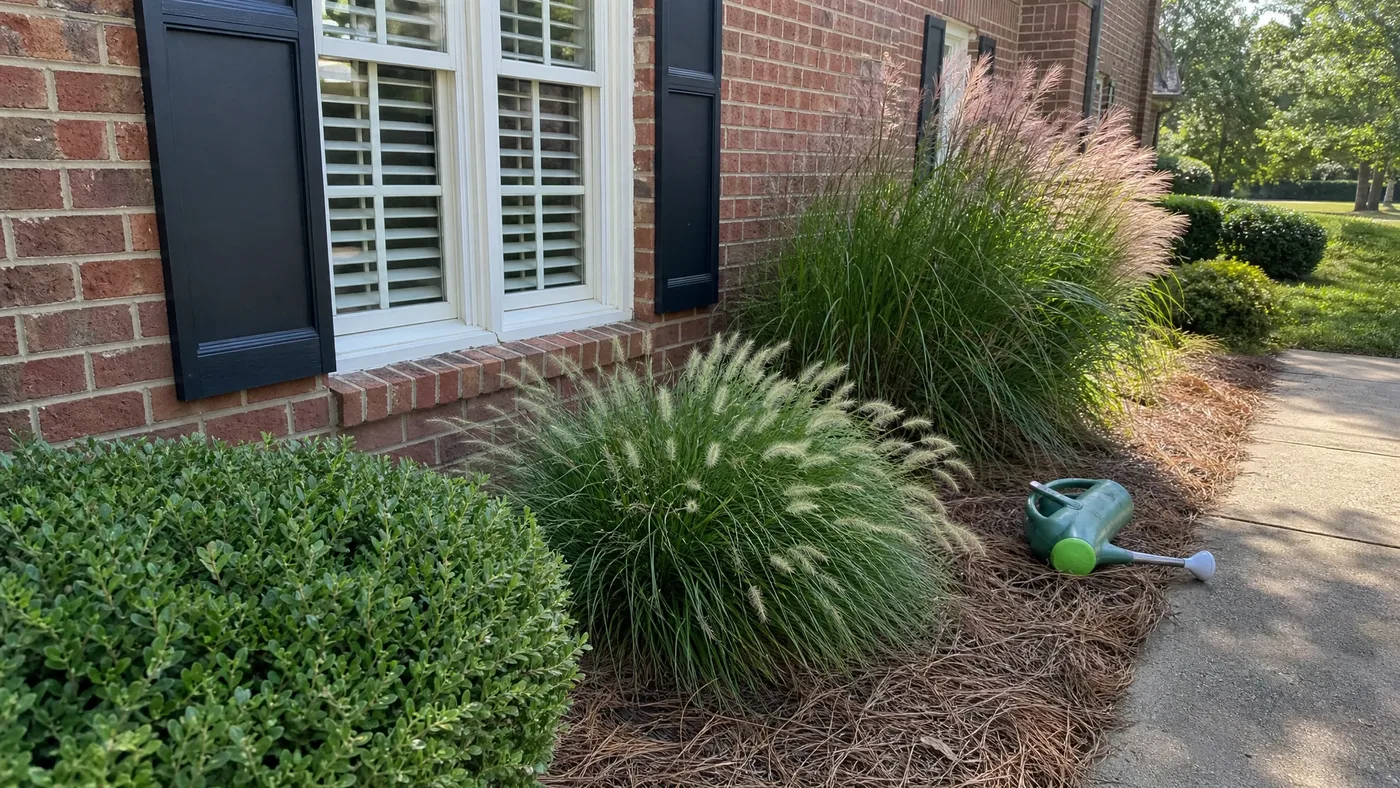
Hameln Fountain Grass vs Red Head Fountain Grass: Size and Color
You stretch a tape measure along the edge of the driveway and read 24 feet. Then you walk to the front window, hold the tape at the sill, and read 30 inches. The plant order has to fit both numbers, and the two fountain grasses on your short list are not the same size.
Hameln and Red Head are both Pennisetum alopecuroides cultivars, so the tags look alike. Their heights and plume colors are different enough to change how many plants you buy and whether you can still see out your window in August. Pick wrong and you either replant in year two or live with a thin, gappy row.
Read on for a worked example: one bed, both plants counted out, a sill test, a color check against the house, a hardiness check and the final order.
A 24-Foot Driveway Bed and Its Constraints
We will follow one bed from measuring to ordering, because the numbers settle this comparison faster than any description does. The bed runs along a driveway and gets full sun. A front window looks out over it, and that window decides more than anything else.
Here is what we know before choosing a plant:
- The bed is 24 feet long, which is 288 inches. Every plant count below comes from dividing that number by a spacing.
- The bed is 3 feet deep, which takes a single row of either grass set toward the middle so the clumps have room to arch outward.
- The window sill sits 30 inches above the soil. Anything that grows taller than that will start to cover glass.
- The house is a single color, and the plumes will be seen against it from the driveway.
Three decisions come out of those facts. Which grass fits under the sill? How many plants does the bed take? And do the plumes look right against the wall? We take them in that order of effort, starting with the count because it is plain arithmetic.
Counting Hameln Fountain Grass Plants at 24 Inches
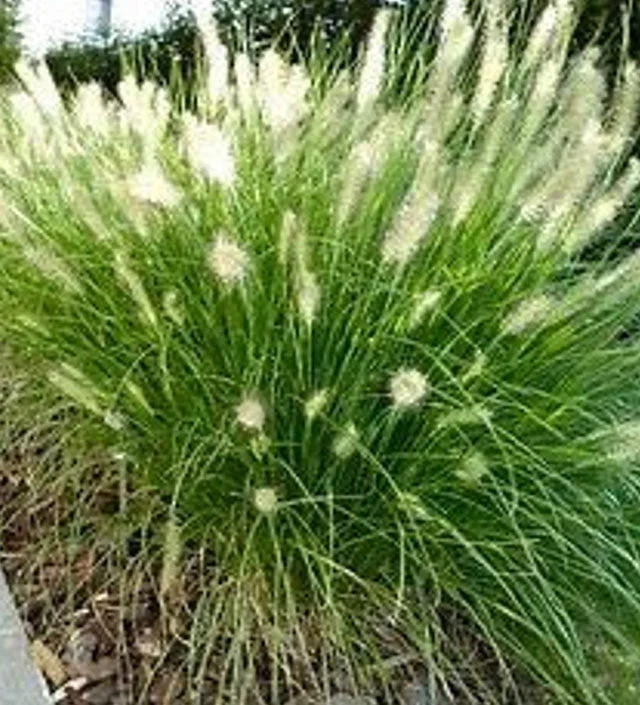
Hameln is the compact cultivar. Its medium green leaves are 18 to 24 inches long, and the plant overall lists at 2 to 3 feet tall and wide once the plumes rise. So think of an 18 to 24 inch mound of leaves with flower spikes lifting it toward the top of that range.
We space Hameln 24 inches apart in a border, and our spacing guide shows how that changes for hedges and masses. Run it: 288 inches divided by 24 is 12 plants. Set the first and last clump 12 inches in from each end of the bed and the row fills the 24 feet exactly.
Because a mature clump can reach 3 feet wide, neighbors set 24 inches apart touch at the edges within a season or two. The result is a continuous low ribbon of arching leaves rather than a row of separate dots. That is what you want along a driveway, where a gap shows.
The ribbon also changes through the year. Hameln blooms about two weeks earlier than other fountain grasses, so the plumes arrive before the late-summer rush. The leaves turn yellow in fall and tan in winter, which gives the bed something to look at after most perennials are gone.
Redoing the Count With Red Head at 36 Inches
Red Head grows to roughly 3 to 4 feet, about a third to a half taller than Hameln. A grass that size needs more room, so we plan it at 36 inches between centers. Divide 288 by 36 and you get 8 plants, with the end clumps 18 inches from each end of the bed.
Here are the two plans side by side:
| Hameln | Red Head | |
|---|---|---|
| Mature height | 2 to 3 feet with plumes | 3 to 4 feet |
| Spacing used | 24 inches | 36 inches |
| Plants for 24 feet | 12 | 8 |
| Plume color | Silvery to pinkish-white | Smoky dark red |
The look changes more than the count suggests. Eight Red Head clumps read as eight distinct fountains with open ground between them in the first seasons. By maturity they close up, but each one stands higher and the bed feels like a screen rather than an edging.
Fewer plants does not mean a cheaper or easier bed, though. Each Red Head clump takes up half again as much of the row, and each one has to be right, because one failure leaves a 3-foot hole. Our comparison of Pennisetum cultivars covers where else a taller type earns its place.
Hameln Fountain Grass Under a 30-Inch Window Sill
This is the if-then test, and it is the part of the example that decides the order. If the plant's mature height is above the sill, it will cover the glass by the time it flowers. Red Head at 3 to 4 feet is 36 to 48 inches. That is 6 to 18 inches over the sill, so it fails the test here.
Hameln passes with a caveat we would rather state plainly. The leaf mound at 18 to 24 inches sits well below 30 inches. The plumes push the clump toward the 2 to 3 foot range, so a few spikes may reach the sill line in a good year. Spikes are thin, and you see through them. A wall of leaves is the thing that blocks a window.
To run the test on your own window:
- Measure from the soil to the bottom of the glass, not the top of the sill.
- Compare that number with the plant's full height, plumes included.
- If the plant is taller, choose the shorter one or move the bed away from the window.
Customers usually ask us whether they can plant the tall one and trim it to fit. You can, but you will be cutting off the plumes that are the reason to grow it, and a trimmed clump looks chopped by August. We would rather you start with the right height.
Hameln Fountain Grass Plumes Against Red Head's Tint
The leaves are nearly the same on both plants. Red Head is green, turning gold in autumn and buff in winter. Hameln goes yellow and then tan. The real color difference is in the flower spikes, and that is where this decision lives.
Red Head's bottlebrush flowers are smoky dark red in mid to late summer. They turn brown in autumn and often last through winter. Do not expect red leaves, because the tint belongs to the plumes only. Hameln's spikes are silvery to pinkish-white, a softer effect from the driveway. They can look purple-tinged, so expect a faint blush close up.
Now match it to the wall:
- A light wall, such as cream, gray or pale siding, shows red plumes clearly. Hameln's pale spikes will nearly disappear against it.
- Brick, dark siding or a deep green wall does the reverse. Pale Hameln plumes glow against it and dark red ones sink into the background.
For our example house, assume the wall is mid-toned siding. Color alone would not decide it, so the sill does. If your wall favors Red Head and your sill is high enough, take Red Head without guilt.
Hameln Fountain Grass Hardiness Check Before Ordering
Zone does not separate these two, which keeps the decision simple. Hameln is hardy in USDA zones 5 through 8, and Red Head sits in the same range. If one grew where the other could not, hardiness would be the first thing to check. Here it is not.
Both want full sun. Hameln will grow best in full sun but tolerates part shade, and neither cultivar is fussy about soil pH. A driveway bed that bakes in afternoon sun suits both. Our guide to Hameln hardiness zones goes further into the cold and warm ends of the range.
If you garden at the edge of zone 5 or zone 8, ask your local extension service what has done well in your county before you place the order. Zone maps are broad, and a windy driveway edge can be colder or hotter than the map says. That check applies equally to either grass and does not change which one you pick.
The Order Placed for the Driveway Bed
For the example bed, the sill test settled it. The wall color gave a slight lean toward neither plant, so height decided. We choose Hameln, and the order looks like this:
- 12 Hameln plants, set 24 inches apart down the center of the 3-foot-deep bed.
- The first and last plant 12 inches from the ends of the 24-foot run.
- No Red Head in this bed, because 36 to 48 inches does not clear a 30-inch sill.
If you want some red in the picture, put it where height is an asset. A short run of Red Head at the far end of the driveway, away from the window, uses the taller habit without blocking anything. That is a second, separate order, not a change to this one.
After planting, the bed needs little. Water it in and let it settle. Our companion planting guide is the place to look if you want something low beside the grass. Otherwise plant it and leave it alone. The first full season is when the 12 clumps start to knit into one ribbon.
Measure First, Then Pick the Grass
Our pick for this bed is Hameln, for one reason: the 30-inch sill. If the window were not there, Red Head's smoky red plumes and 3 to 4 foot height would make a strong case for the eight-plant version. Size decides first and color second, since the leaves look so alike.
The final shopping list for the example bed is 12 Hameln, set 24 inches apart. Here is the rule to reuse with your own measurements: if your sightline is lower than a plant's full height, choose Hameln, then divide your bed length in inches by 24 for the count.
Hameln Fountain Grass
Nursery-grown Hameln Fountain Grass in sizes from Quart Plant, shipped to your door.
From $49.49
Shop Now →Our Hameln gets a full day of sun on our farms and a bed of light, fast-draining soil, and that keeps each clump compact enough for a tight window-sill planting like yours. Every plant we ship comes out of our own rows, and the grasses are top-quality ones we would set along our own sills. Once your tape measure has settled the count, come and see the Hameln we have growing.