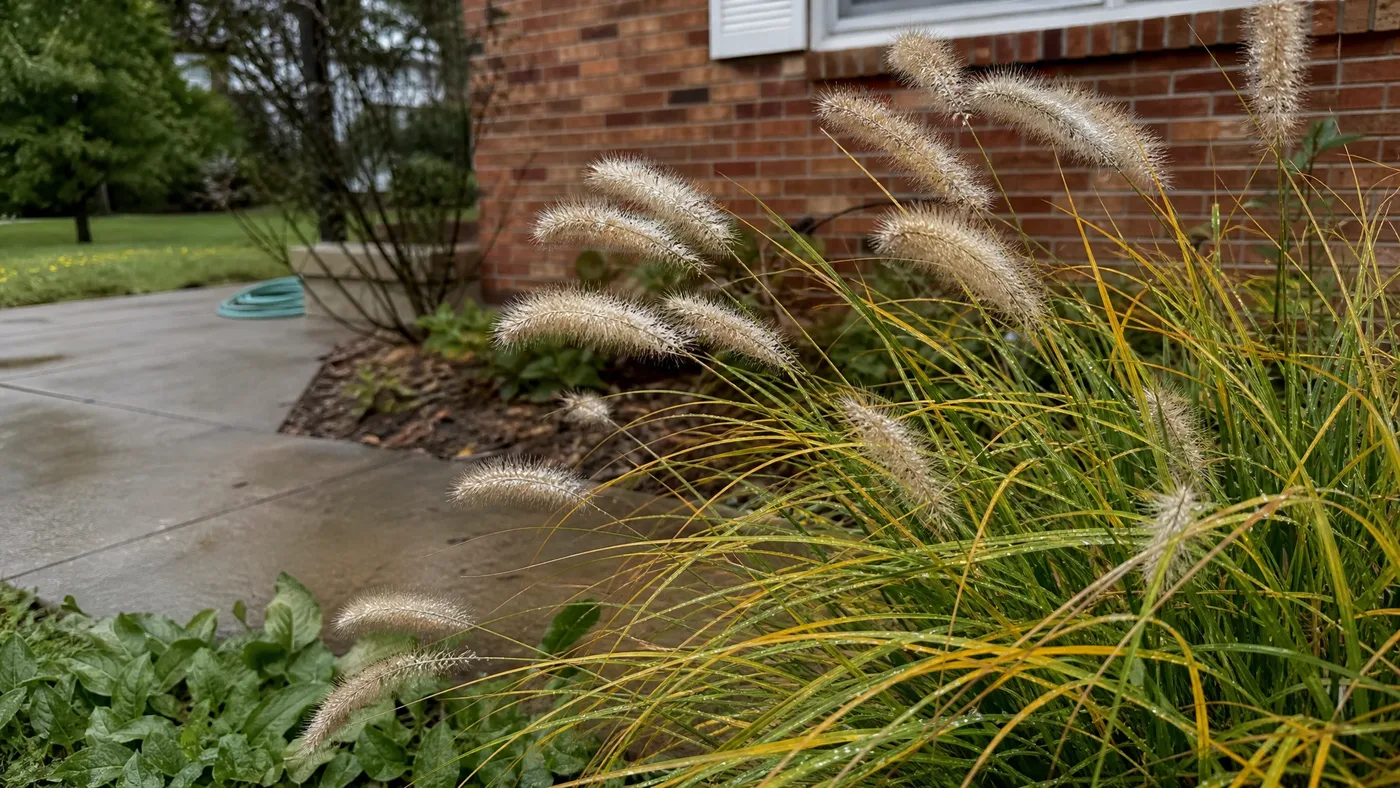
Can You Grow Hameln Fountain Grass From Seed?
Two weeks. That is how much earlier Hameln blooms than the plain species, and it is one of several traits that seed from your plumes will not reliably carry over. A neighbor may tell you the free seed is the same as a purchased plant, since the seed heads sit right there on the grass. We do not buy it.
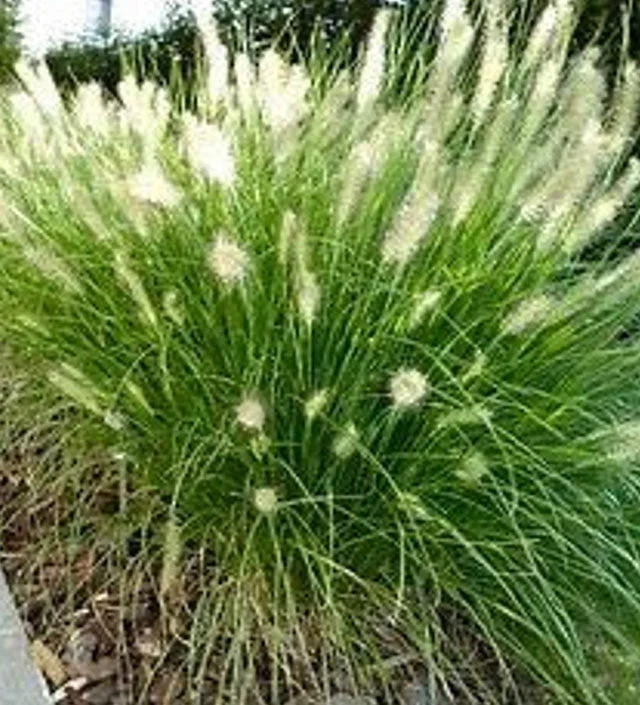
This article talks about growing Hameln fountain grass from seed and answers the questions customers ask us most. Read on to learn how the clump is built, why seed rarely matches the parent, what usually sprouts instead, the narrow cases where sowing makes sense, and the reliable way to get more true plants.
Get it wrong and you spend a season or two raising a taller, looser grass where you wanted a tidy mound. Get it right and every plant you add matches the one you already love.
How Hameln Fountain Grass Builds Its Clump
Hameln is a clumping grass, and almost everything about how you multiply it follows from that. One dense crown sits at the soil line, and new shoots push up from its edge each year, so the clump widens in place instead of running across the bed. A mature plant reaches 2 to 3 feet tall and wide, which makes it the more compact version of a species that reaches 4 feet.
The crown is one individual. Every blade, root and plume on a clump grew from the same start, so every part carries the same genes. A Hameln that has sat in your border for years is not a gathering of seedlings. It is a single plant that got bigger, and that fact decides how you should propagate it.
Why the Crown Splits Cleanly
Roots and shoots form all around the crown, so a section cut from the clump arrives with both. Wisconsin's extension horticulturists call division easy in spring as growth begins. Each piece is the same plant, just smaller, with the same size, habit and bloom timing as the parent. It grows best in full sun and tolerates part shade, so a division settles in anywhere you have a sunny spot.
Widening in Place, Not Running
Because new shoots rise from the edge of the crown rather than from runners, a Hameln stays where you put it. That is why it works as an edging or a repeated border plant, and why spacing matters more than containment. The species grows at a medium rate, so expect a young clump to take a few seasons to fill out. Hameln is hardy in zones 5 through 8.
What the Plumes Actually Do
The plumes run on a separate system. Hameln flowers in summer and fall, and those bristly, purple-tinged spikes exist so the plant can set seed. Seed makes new individuals. The crown makes copies. Hameln does both jobs, but only the crown gives you more Hameln.
Why Hameln Fountain Grass Seed Rarely Comes True
Hameln is a cultivar, which means a selected plant with a compact habit and early bloom that is kept going by dividing it rather than by sowing it. Every Hameln you can buy is a piece of that selection. Nobody keeps the look by sowing seed, and there is a reason for that.
Seed Reshuffles the Genes
A seed forms after pollination, which mixes the parent's genes with genes from whatever pollen arrived. The offspring is a new individual, and it can land anywhere between Hameln and its wild relatives. The Wisconsin extension says fountain grass can be grown from seed, but that many types do not always come true from seed. Hameln gets no exemption from that rule.
We often see people assume a healthy parent means a faithful seedling. Plant health has nothing to do with it. A vigorous Hameln can still throw seed that grows up as something else.
The Traits You Would Be Gambling With
Wisconsin describes Hameln as more compact than the species, with bright green foliage and silvery-white flowers that open about two weeks earlier. Its size is given as 18 to 24 inches in that source and 2 to 3 feet elsewhere, so check how it grows near you. Each of those traits is a separate roll of the dice in a seedling, and you need all of them to land together.
You Find Out Late
Here is the real cost. A seedling in a pot looks like any young fountain grass, so you cannot tell a near miss from a match until the plant has grown into its size and flowered. By then it has taken up a place in your garden for a season or more. "Might match" is carrying the whole claim, and we would not plant a border on a might.
What Sprouts Instead of Hameln Fountain Grass
Expect the wild type. Seedlings from a named cultivar typically drift back toward the species, Pennisetum alopecuroides, which grows in clumps 2 to 4 feet tall and wide, runs larger and more vigorous, and holds a looser shape. You may see a few that resemble Hameln. Most will not, and the odds of a true copy are not in your favor.
Hameln Against Its Likely Offspring
This table sets the plant you want beside the seedling you are most likely to get.
| Trait | Hameln | Typical seedling |
|---|---|---|
| Size | 2 to 3 feet tall and wide | Often toward the species' 2 to 4 feet |
| Habit | Compact, tidy clump | Looser, less predictable |
| Bloom | About 2 weeks earlier than the species | Closer to the species' mid-summer to fall |
| Reseeding | Less than the species, per Wisconsin | Closer to the species' self-sowing |
If space is tight, read our guide on how big Hameln fountain grass really gets before you gamble on a seedling's final size. Our page on Hameln bloom time shows the timing a true plant gives you.
Seedlings Spread More
The species is the troublemaker here. Chinese fountain grass spreads by wind-carried seed and clings to clothes and fur, and it has escaped gardens and become a problem in parts of the country. A seedling that reverts to type can bring that habit with it. Check with your local extension service about how fountain grass behaves in your area.
If volunteers do show up near your Hameln, pull them while they are small. A seedling you did not plan is a poor candidate for a spot you did.
Testing the Claim That Seedlings Match the Parent
People cite three things to back up the claim that seed from Hameln gives you Hameln. We looked at each one. None of them proves it, and one of them cuts the other way.
The Seed Sowing Instruction
Hameln can be propagated by seed sown in containers in a warm greenhouse in spring, or by division in spring. That is a real instruction, and it gets quoted a lot. It tells you how to start seed, though, and says nothing about what grows from it. A listing of methods is not a promise of resemblance.
The Neighbor's Success Story
"Mine came up just fine" is the other common exhibit. One neighbor's patch is a single trial with no control, judged by eye. Young seedlings pass for the parent for a long while, and differences in height, shape and bloom date only show at maturity. If nobody planted a true Hameln beside the seedlings, nobody can say they match.
The Claim That It Never Reseeds
One claim is that, unlike the species, this cultivar does not re-seed itself. Wisconsin says it reseeds less prolifically than the species, and other accounts say it can self-seed aggressively. The answers differ. Whatever the truth, a plant that reseeds little gives you little seed to collect, and none of it is guaranteed to be Hameln.
When Growing Hameln Fountain Grass From Seed Is Worth a Try
You will hear that fountain grass is easy from seed. That is true of the species and misleading for the cultivar, because easy germination and true results are different things. Sowing makes sense only when you will be happy with whatever comes up, and a few situations fit that description.
- You want a fountain grass and do not care whether it is Hameln. Expect a plain, larger grass in the 2 to 4 foot range.
- You enjoy the experiment. Sow a handful, label the pots as unnamed seedlings, and accept a mixed result.
- You have a big, informal area where a looser, taller grass fits, and you will watch for self-sown volunteers.
- You are willing to cull. Keep only the seedlings that clearly look like Hameln, and expect to discard most of them.
One of the most common questions we get is whether a few seedlings are worth keeping. Our answer is yes if you wanted a fountain grass and no if you wanted Hameln. If you simply want a different look, a different cultivar is faster, and our comparison of Pennisetum cultivars shows the options.
If You Do Sow
Use the container method: sow in containers in a warm spot in spring, and keep the seedlings in pots until you can see how they grow. Do not move them into the border on faith. Give them full sun, since fountain grass flowers best there, and decide which to keep only after the first plumes open. Anything that is clearly taller or looser than your parent plant goes to a back corner or the compost.
Division Does What Seed Cannot
Division gives you the same plant, every time. Because a clump is one individual, a section of it is that individual in a smaller package. Size, habit and bloom timing come along unchanged, and you skip the wait to find out what you grew. A division also starts with roots and shoots already formed, so it usually looks like a real plant much sooner than a seedling does. This is the method we tell customers to use.
Dividing in Spring
Do the work in spring as growth begins, the timing the Wisconsin extension gives for fountain grass. The steps are short.
- Lift the clump as growth starts, with a spade cut wide of the crown.
- Cut it into sections with a sharp spade, making sure each one has shoots and roots.
- Replant each piece promptly at the depth it grew, in full sun if you can.
- Water it in, then leave it alone.
Our guide to planting Hameln fountain grass covers depth, spacing and watering in more detail.
If You Have No Clump Yet
No clump to divide means you buy one, and a single plant gives you plenty to divide later. Our notes on container sizes and what to look for help you choose. Hameln tolerates acidic and alkaline soils, so you rarely need to fuss over soil before planting.
Verdict on Seed-Grown Hameln Fountain Grass
You can sow seed from a Hameln plant, and something will probably come up. What you cannot count on is Hameln. The sources agree that fountain grass does not always come true from seed, and the likely result is a taller, looser, more vigorous plant that favors the species and may spread more than you want.
We cannot promise every seedling will stray, and the evidence leaves room for a lucky one. We still would not bet a bed on it. Buy a plant or divide the one you have.
Hameln Fountain Grass
Nursery-grown Hameln Fountain Grass in sizes from Quart Plant, shipped to your door.
From $49.49
Shop Now →Hameln thrives in our rows because we give it plenty of sun and a light, fast-draining soil, and that is the plant we stand behind when a named cultivar matters more than a packet of seed. Everything we send out is a top-quality grass we would put in our own beds. If you would rather start with a clump that is true to its name, see the Hameln we have ready.