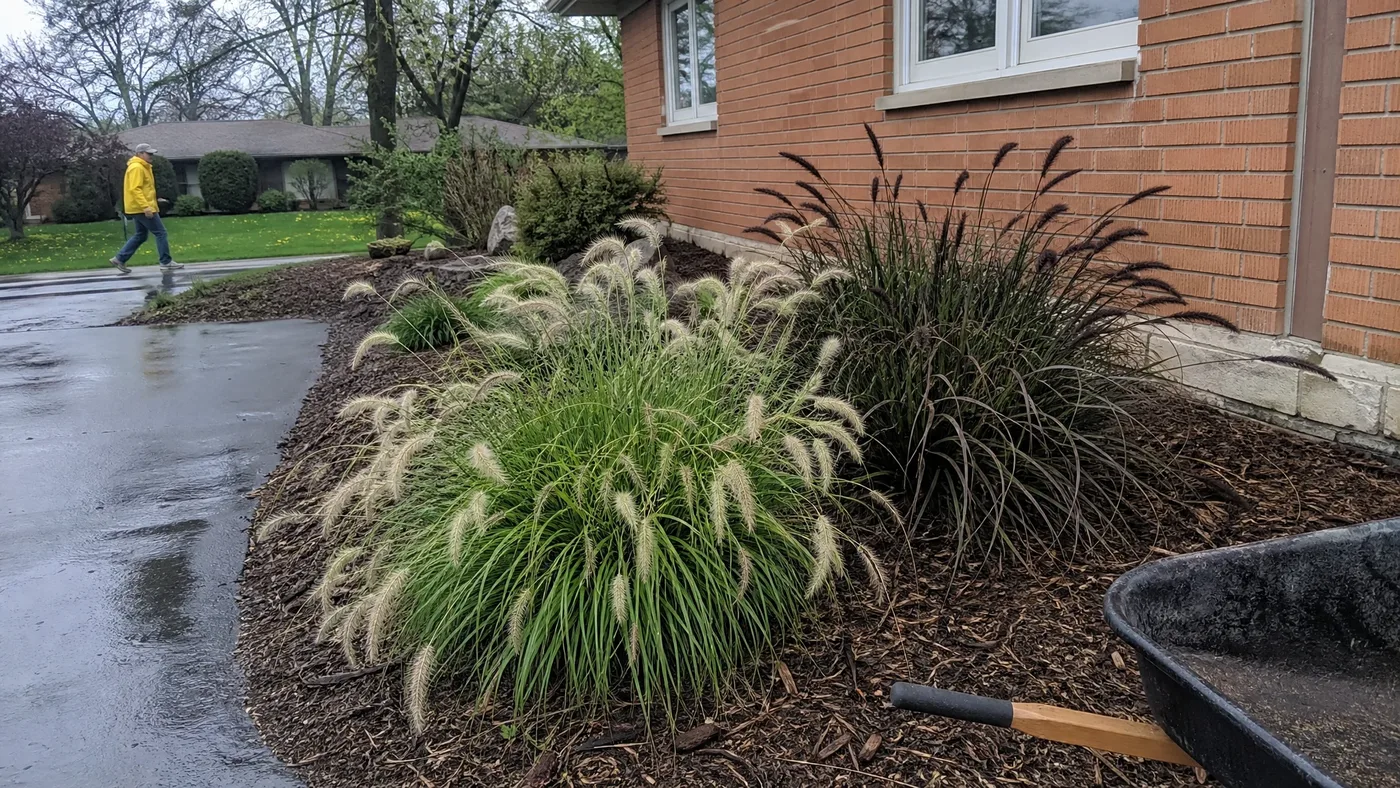
Hameln Fountain Grass vs Black Beauty: Size and Plume Color
Run your palm along a row of plumes in September and your hand knows before your head does: the soft give of tan bristles, the lean, the spring back upright. We noticed it again in our rows this season, when customers kept stopping at the same stretch and reaching out.
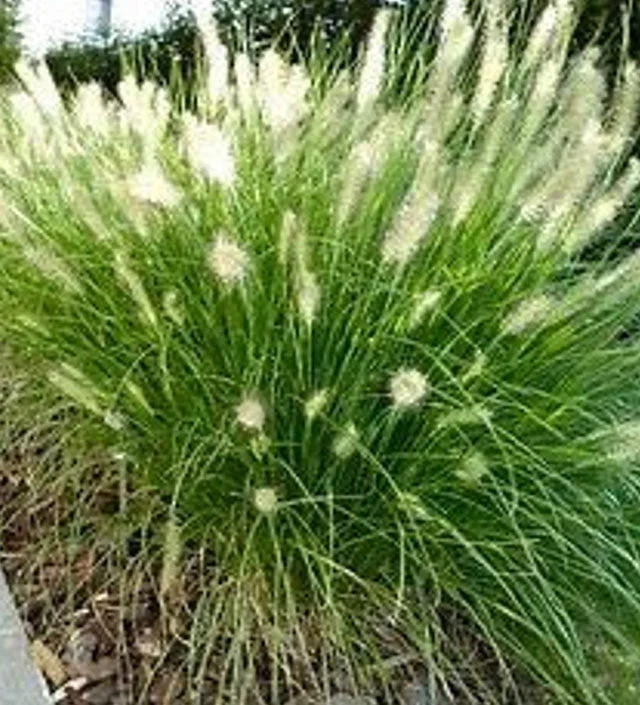
That moment explains why so many people ask us to set Hameln Fountain Grass beside Black Beauty. Both are Pennisetum alopecuroides selections, and they sit at nearly the same height, but the plumes could hardly look more different. Pick the wrong one and you live for years with a color that fights your bed. Pick the right one and you get a clump that asks for almost nothing.
We'll walk you through size, plume color, bloom timing, cold limits, soil and sun, and how each plant feels and sounds in a breeze, then sort you by garden type so you can choose.
Standing Eye to Eye With Hameln Fountain Grass
Hameln is a compact grass, and the numbers are modest. It stands 2 to 3 feet tall and 2 to 3 feet wide. In body terms, that is roughly knee to mid-thigh on most adults, and about arm's reach across. The plumes add a little more height in late summer, but the clump never towers over a bed.
Black Beauty lands in the same neighborhood. It is a clump-forming grass to around 1 meter tall, which is about 3 feet, with tall stems carrying the dark flower heads. That matches the top of Hameln's range, so on paper the two overlap far more than people expect.
What a Clump Does to a Bed
Either plant forms a rounded fountain that fills the space between low edgers and taller back-row plants. It sits at the front or middle of a border without blocking the view behind it. The wild species is bigger, reaching 2 to 4 feet tall and wide, so a cultivar this tidy is easier to place near walks and windows. Our longer piece on how big Hameln really gets covers clump growth year by year.
Verdict: size should not decide this one. If you need a grass that stays at or below 3 feet, Hameln is the safer bet, because its range is well documented. Check the tag on any Black Beauty you buy and make your call on color.
Tan Plumes, Near-Black Plumes, and the Light Between
Here is the real difference. Hameln's plumes are pale and soft, tan with a silvery cast, so the color is a blush, not a statement. Black Beauty carries flowers that are dark purple to black on bottlebrush heads. One plant glows, the other absorbs.
Light changes everything. The table shows how we see each plume across a day in the garden.
| Light | Hameln | Black Beauty |
|---|---|---|
| Morning, low and from the side | Bristles light up and the plume looks almost white at the edges | Deep wine tones show at the tips |
| Midday, overhead | Flattens to a calm tan | Reads as a dark smudge, nearly black |
| Evening, low and behind | Backlit gold halo | Dark core with a thin bright rim |
Backdrops That Work
Pale plumes need something darker behind them. A dark fence, evergreen hedge or deep-colored shrub makes Hameln sparkle. Dark plumes do the opposite. They vanish against mulch, shadow or a dark wall, so put Black Beauty in front of pale gravel, silvery foliage or a light fence, where the near-black heads stand out like ink.
Verdict: choose Hameln if you want softness that blends with other plants. Choose Black Beauty if you want a bold accent. Our guide to companion plants for Hameln shows partners that suit the pale plumes.
Hameln Fountain Grass Blooms Before the Dark Ones
Hameln is the early bloomer. It flowers about two weeks ahead of other selections of the species, and its plumes appear in late summer. It is also listed as flowering in both summer and fall. Black Beauty runs on the species schedule instead.
In practice this means Hameln's plumes are up and soft while Black Beauty is still building toward its show. One of the most common questions we get is whether the two can be planted together for one big display. They can, but expect Hameln to lead, and the combined effect stretches across more of the season than either does alone.
Plumes of both fade gently rather than dropping, so the show lasts well into fall, and the foliage of Hameln follows with its own gold, which we cover in our piece on what to expect and when.
Verdict: if your season ends with the first hard frost and you want plumes early enough to enjoy them, Hameln has the edge. If you plant in a mild fall climate and can wait, Black Beauty's later dark heads are worth the patience.
Winter Nerve and Zone Limits for Hameln Fountain Grass
Hameln is reliable where winters are cold but not brutal. It does well in USDA zones 5 through 8, and it is advertised for zone 5. The species is generally rated a notch warmer, zones 6a through 9b.
| Plant | Zone figure |
|---|---|
| Hameln | 5–8 |
| Hameln (advertised) | 5 |
| Species | 6a–9b |
| Black Beauty | No figure in our sources |
We do not have a verified zone range for Black Beauty, and we will not guess. It shares the species, so the species range is a fair starting point, but ask your local extension service before betting on it at the cold edge of zone 5. Hameln is the plant with the paper trail for that edge.
Either one is a plant-it-and-leave-it grass in winter. Leave the clump standing for the plumes, then cut it to the ground in late winter, as is advised for the species. We walk through the method in cutting Hameln back.
Verdict: in zone 5 or on an exposed site, Hameln. In zones 6 to 8, both are fair choices, with Black Beauty confirmed locally.
Soil and Sun Both Plants Forgive
This is where the two plants are the same, and it is good news. Neither asks for special treatment. What both want:
- Full sun for the best plumes. The species flowers best in full sun, and Hameln tolerates part shade but grows best in the sun.
- Average soil of almost any chemistry, since Hameln tolerates acidic and alkaline soils.
- Good drainage, which keeps the crown healthy through winter. See our guide to soil and drainage for Hameln.
- No fuss over pests, since no major pest or disease concerns are reported.
Hameln is also highly resistant to deer, which saves you a fence. We have no deer data for Black Beauty, so do not count on it.
The Small Difference
Part shade is where we would steer you to Hameln. Its pale plumes still read fine in softer light, and the cultivar is documented to tolerate it. Dark plumes lose drama without strong sun, and they are the whole point of Black Beauty. Give the dark one your brightest spot.
Verdict: tie, with Hameln slightly more forgiving in shade.
What Hameln Fountain Grass Feels Like Underhand
Back to that September hand. Hameln's plumes are bristly in the technical sense, but the bristles are fine and give way like the fur on a cat's tail. They are soft enough that visitors cannot stop touching them. We like to plant Hameln beside a path for that reason, so the plumes brush a sleeve as you pass.
Movement is the second pleasure. Narrow arching leaves and plumes on slender stems sway on the lightest air, and a row of Hameln looks like water moving over stones. In a stronger breeze you hear a dry, papery whisper, quiet enough for a patio and loud enough to notice on a still evening.
Black Beauty has the same bottlebrush build and the same leaf, so the feel is similar. The difference is visual: the dark heads look heavier on the stem, and in a breeze they bob rather than shimmer. Pale plumes catch the light as they move, and dark ones swallow it, so Hameln reads as more animated even with identical motion.
Verdict: for touch and shimmer, Hameln. For quiet, dramatic movement, Black Beauty.
Matching Hameln Fountain Grass to Your Yard
We cover four common situations in the order below: cottage beds and mixed borders, modern and gravel gardens, cold or partly shaded sites, and first-time buyers. Under each one we say which grass we would plant and why, so you can match it to your own yard.
Cottage Beds and Mixed Borders
Choose Hameln. Its tan plumes blend with flowers and with other grasses and do not draw the eye away from them. Plant it in groups and let the clumps knit together.
Modern, Gravel and Pale-Backdrop Gardens
Choose Black Beauty. Near-black plumes want a light surface behind them, and a gravel bed or pale fence gives the contrast a designer would pay for. Give it full sun.
Cold Winters or Part Shade
Choose Hameln. Zone 5 is documented for it, and it tolerates part shade. If you are unsure of your zone, our guide to Hameln hardiness zones helps you check.
First-Time Buyers
Start with Hameln. Its size, zones and bloom time are all documented, so there are no surprises. We grow it in our own rows so we can tell you how it behaves.
Pick the Glow You Want to Walk Past
Hameln and Black Beauty are close cousins that differ mostly in color. Hameln gives you soft tan plumes at 2 to 3 feet, early bloom and the best-documented hardiness. Black Beauty gives you dark purple to black heads at around 3 feet, with a longer window into autumn, if you have the sun and a light backdrop.
Imagine the end of a long day, low sun lighting one tan plume next to a dark one. Pick the plant whose glow you would want to walk past every evening.
Hameln Fountain Grass
Nursery-grown Hameln Fountain Grass in sizes from Quart Plant, shipped to your door.
From $49.49
Shop Now →We grow Hameln on our farms in full sun, the way it does best. Customers come back to us for its soft plumes and its low-maintenance habit, and as a small business of growers who raise every plant we sell, we would love you to start with one of ours at our shop.