Is Hameln Fountain Grass Pennisetum or Cenchrus Now?
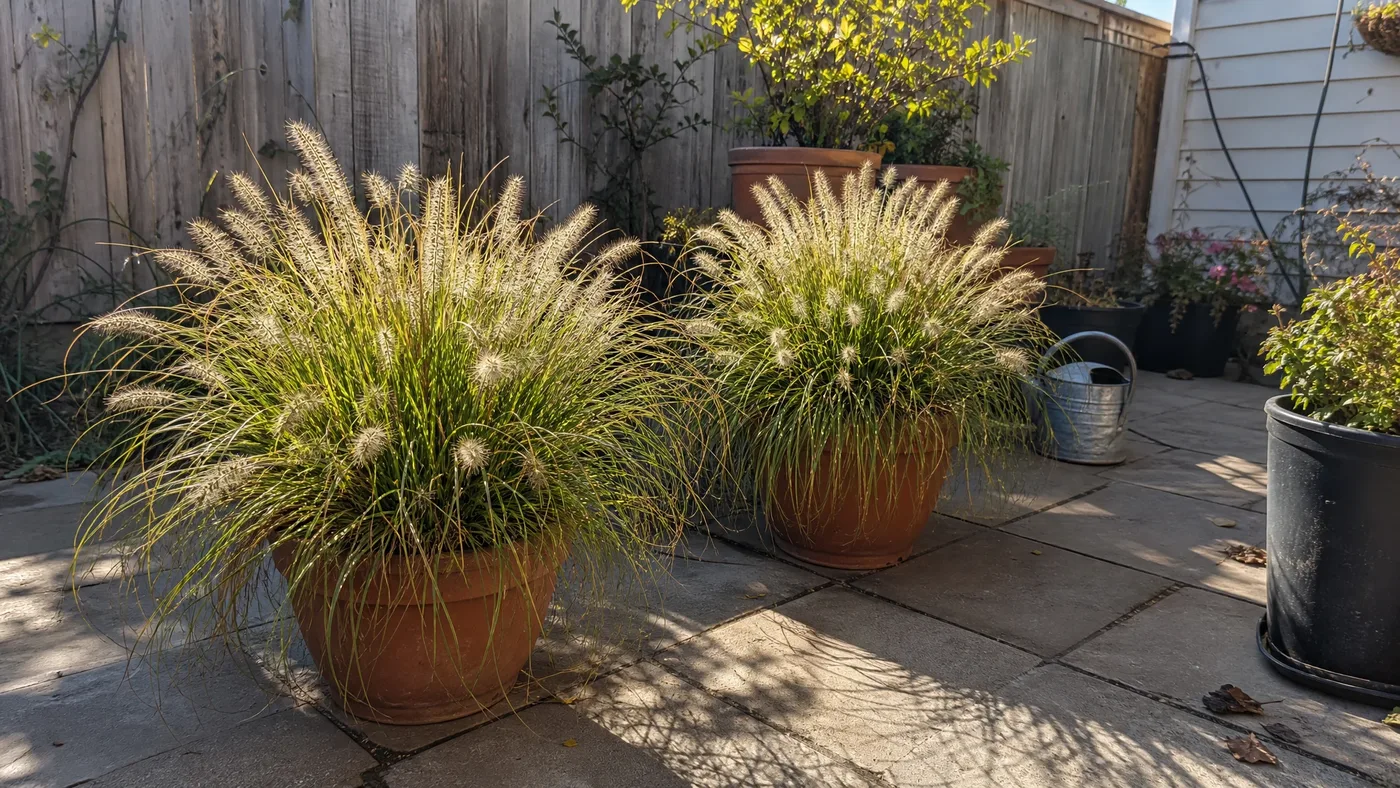
You're standing in a fall plant sale aisle with two tags in your hands. One reads Pennisetum alopecuroides 'Hameln'. The other reads Cenchrus alopecuroides 'Hameln'. The pots look identical, with the same arching dark green mound and the same bristly plumes. Fall is when people shop for grasses, so it's when the label question hits hardest.
It's the same plant. This guide covers everything you need to know about the two names, from how the genus change happened and who accepts it to how to search for stock and what to write on your own garden label. Misread the tags and you may pass over a good plant or order the wrong one. Read them right and you get a 2–3 foot mound that asks for very little.
Two Tags on One Hameln Fountain Grass
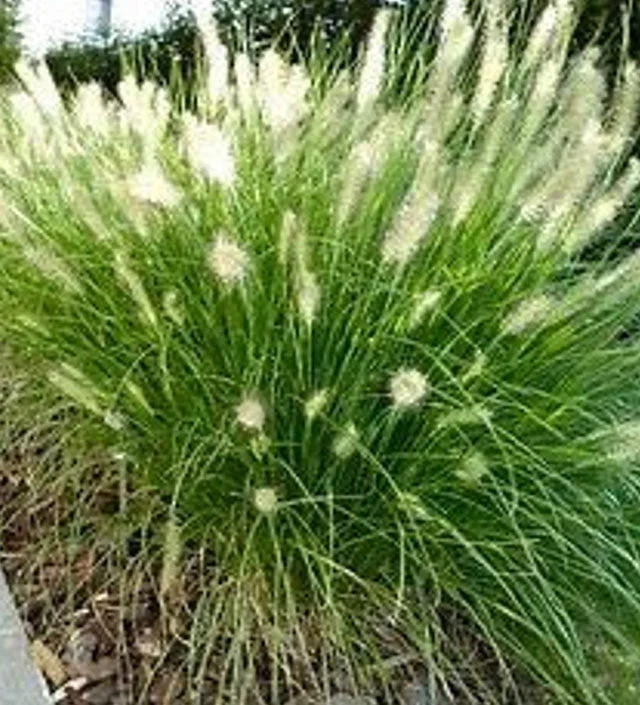
Two tags on one pot is a real label mismatch, and you'll see it in catalogs, on garden center benches and at plant swaps. Buyers reasonably wonder whether the Cenchrus tag means a cousin, a hybrid or a mislabel. It's none of those. Both names point to one cultivar, the compact, dark green fountain grass that has been a garden staple since it was introduced in the 1970s as the more compact version of the species, with shorter flower spikes.
The Older Name
Pennisetum alopecuroides 'Hameln' is the name on most older tags, books and catalogs. If you bought a Hameln years ago, this is the name you wrote down. Nothing about the plant is wrong under that label. It's simply the previous genus.
The Newer Name
Cenchrus alopecuroides 'Hameln' is the same plant filed under the genus botanists now favor. The cultivar is listed there, with the Pennisetum name kept as the former one. The part that never changed is the cultivar name in single quotes, Hameln. That is the word that tells you which plant is in the pot.
How Pennisetum Got Folded Into Cenchrus
Run your hand down a Hameln flower spike in late summer and it feels bristly, like a bottle brush. Those bristles are the best way into the name change, because plant classification leans heavily on flower structure.
The case for the merger is that Pennisetum and Cenchrus share the same basic flower-cluster design, including the ring of bristles around each cluster. Botanists who compared the two groups judged the likeness too close to keep them in separate genera, so Pennisetum species were moved into Cenchrus. The extension pages we rely on state the result the same way: the species has been reclassified.
What did the move change in your garden? Nothing. The clump didn't shrink, the plumes didn't change color and the winter hardiness stayed put. Put plainly, the plant currently known as Cenchrus alopecuroides was formerly known as Pennisetum alopecuroides. A genus name is a filing label for botanists, and the plant under it grows the way it always did.
The Botanists Behind the Name Change
Ask who made the change and you'll find the extension pages we use don't name anyone, so we won't guess at names for you. What those pages do show is who has followed along, and that's the information that matters when you're reading a tag. Acceptance is real but uneven.
Where Cenchrus Is Already Standard
Some university plant databases have moved both the species entry and the Hameln entry to Cenchrus, keeping the old Pennisetum name on each as the former name, so anyone arriving by the old route still lands in the right place. If your reference is a university plant database, expect to see the new genus more and more.
Where Pennisetum Hangs On
Wisconsin Extension spells out the split: Pennisetum species have been reclassified, though this change has not yet been adopted by all references. Its own page title shows both names, Cenchrus (Pennisetum).
Which would we choose? We treat Cenchrus as the correct name and Pennisetum as the name you still need. Searching only the new name misses plenty of stock, and writing only the new name on a label confuses the next gardener who reads it.
Why Nurseries Still Print the Old Name
A printed plant tag lives a long time. It gets ordered in bulk, tucked into pots, and reused across seasons until the box is empty. A tag that said Pennisetum when it was printed will say Pennisetum when it reaches the bench, however the botanists have since filed the plant. Catalogs and web listings work the same way, since a page that has ranked well under a familiar name rarely gets rewritten the day a genus changes.
There's also a sound reason to hold on. Customers search for the name they know. Most gardeners learned fountain grass as Pennisetum, and sellers who list only Cenchrus would lose buyers typing the old name. Some references haven't adopted the change, so the old label isn't an error. It's a choice between two accepted names.
One of the most common questions we get is whether a Cenchrus tag means a different plant. It doesn't. Some people will tell you to skip any seller still printing Pennisetum, and we'd say that's backwards. An old tag tells you about printing schedules, not plant quality. Judge the seller on the plant and on the cultivar name.
What the Change Means for Hameln Fountain Grass Buyers
Picture two pots on a bench, one tagged Pennisetum and one Cenchrus, priced the same. You can't tell them apart by genus, so don't try. The genus is the least reliable part of the label right now, while the cultivar name and the size claim carry the real information. Treat the tag as a checklist.
- Find 'Hameln' in single quotes. That is the name to match, whichever genus sits in front of it.
- Check that the species name reads alopecuroides. Other fountain grasses share a common name but not this plant.
- Look for a mature size of 2–3 feet tall and wide. A promise of 4 feet suggests the larger species, which grows 2 to 4 feet tall and wide.
- Confirm the hardiness range. Hameln is hardy in zones 5 through 8, so a tag claiming something very different deserves a question.
- Be wary of a tag that says only "fountain grass." That common name covers several plants, and our guide to how Hameln compares with other Pennisetum cultivars shows why the cultivar name matters.
If a label still leaves you unsure, ask the seller. When you order from us, the cultivar name is on the plant, and we're glad to answer name questions. Our guide to container sizes and what to look for covers the rest of the buying decision.
Searching for Hameln Fountain Grass Under Both Names
Type only the new name into a catalog search and you may get nothing, then type the old one and find the plant in stock. Sellers index plants under whichever name their supplier used. The fix is to run every search twice and to anchor on the cultivar name, which stays the same in both.
This table shows which search term catches what.
| Search term | What it tends to find |
|---|---|
| Pennisetum alopecuroides 'Hameln' | Older catalogs, books and sellers still using the former genus |
| Cenchrus alopecuroides 'Hameln' | University databases and sellers that updated their listings |
| Cenchrus (Pennisetum) alopecuroides Hameln | Pages that show both names together |
| Hameln fountain grass | Common-name listings that skip the genus |
| Dwarf fountain grass Hameln | Retail pages that lead with the compact habit |
Reading Care Sheets Under Either Name
The same split applies to care sheets. A sheet filed under Cenchrus and one filed under Pennisetum can describe the same plant, so read both before you decide. Expect small differences in size, such as Illinois Extension listing 'Hameln' as a 2 to 3 feet dwarf form while another sheet gives 0.5–1 meters, which is about 1.5–3 feet. Those ranges overlap, so don't read them as disagreement. For local timing, check with your extension service.
Planting and Care Stay the Same
We've planted Hameln under both tags and the plants behave identically, because the name is the only thing that moved. Everything you already know about fountain grass care still applies, and our complete growing guide covers it in full.
Sun, Soil and Spacing
Give it full sun. Hameln grows best in full sun but tolerates part shade, and it tolerates both acidic and alkaline soils. Space plants for a clump 2–3 feet wide. The plant is highly resistant to deer grazing, which is one reason it earns a spot at the edge of a yard.
Hardiness and Cutting Back
Hameln is hardy in zones 5 through 8, and our hardiness zones guide looks at where it thrives. Cut the foliage to the ground in late winter and leave it standing until then. Our guide to cutting back Hameln has the steps.
Seedlings
Reseeding is the one place the answers differ. Unlike the species, this cultivar does not re-seed itself, and its seeds are sterile. The species, though, can self-seed aggressively. If seedlings appear, pull them while small.
Hameln Fountain Grass Under Either Name
Call it Hameln fountain grass in conversation, since that's the name that never changed. Use Cenchrus when you're reading university sources and Pennisetum when you're reading older books or catalogs. Search under both, match the cultivar name rather than the genus, and expect the same sun, spacing and late-winter cutback whichever tag came on the pot.
For your own garden, write both names on the plant stake: Cenchrus alopecuroides 'Hameln' with Pennisetum alopecuroides beside it. Future you, and anyone who inherits the garden, will be able to find care information under either name.
Hameln Fountain Grass
Nursery-grown Hameln Fountain Grass in sizes from Quart Plant, shipped to your door.
From $49.49
Shop Now →Hameln settles in on our farms with a full day of sun and a late-winter cutback, and it asks for nothing different whichever genus name is on the tag. We are a small team of growers, and every tree, shrub and grass we sell is one we raised ourselves. Once the naming is sorted out, begin with a Hameln of ours.