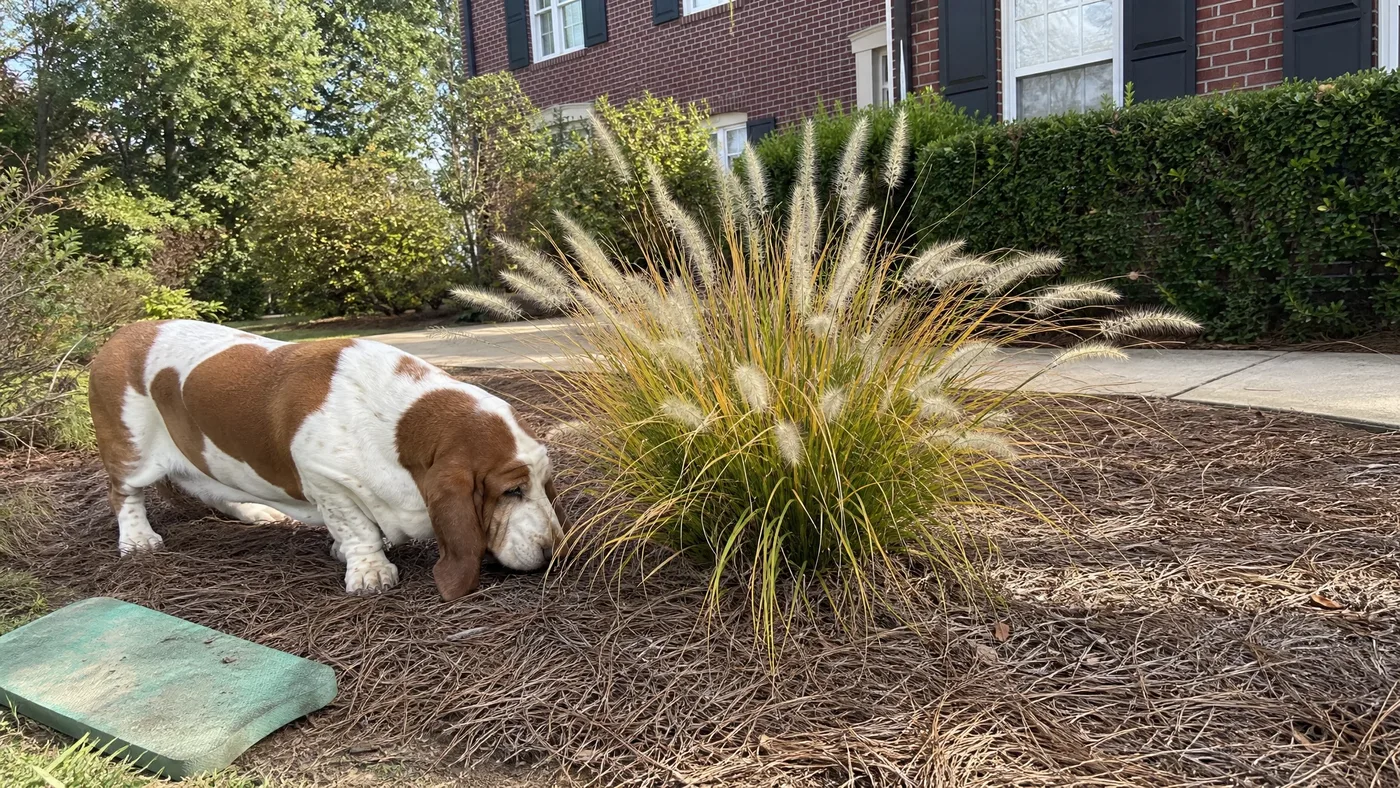
Is Hameln Fountain Grass Safe for Dogs and Cats?
You want to know whether Hameln fountain grass will hurt your dog or cat before you plant it, and a simple toxic-or-not label does not answer that well. A plant is toxic when it contains a chemical that poisons an animal that eats it. We know of no source that lists Hameln as poisonous, but that is only half the answer.
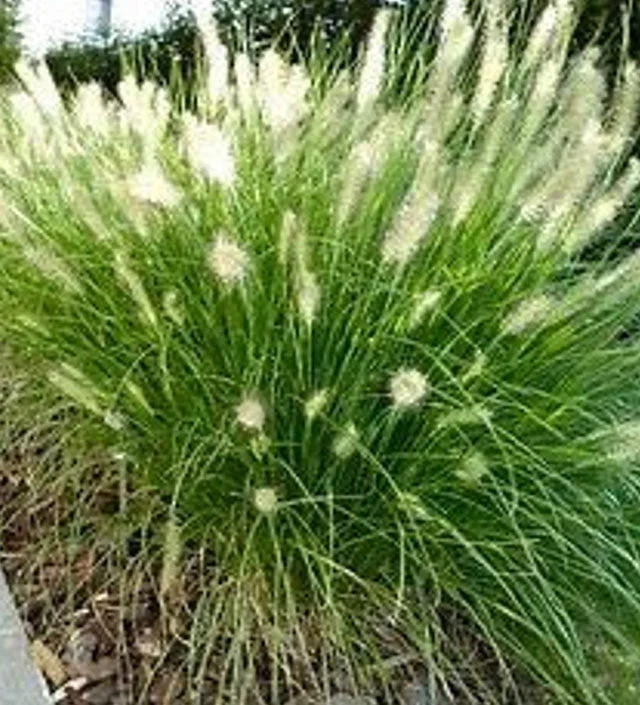
The other half is mechanical. The flower spikes carry stiff bristles that can poke a mouth or an eye and may upset a stomach when swallowed. We'll walk you through a narrow side bed, a windy corner lot and a pot on a hot deck, then the puppy who eats everything, and finish with the rules that carry over to any yard. Get the placement right and you keep the arching clump and its plumes without a trip to the vet.
Hameln Fountain Grass in a Narrow Side Bed
Start with the numbers, because in a side bed they decide everything. A Hameln clump reaches 2 to 3 feet tall and 2 to 3 feet wide, so a bed about 3 feet deep has no room left once the blades arch. They spill onto the path, and a dog running that path brushes them on every pass.
Foliage Is the Low-Risk Part
Daily brushing against the leaves is the smaller worry. A close relative, fountain grass (Pennisetum setaceum), is non-toxic to pets according to the ASPCA. That is a different species from Hameln, so read it as a strong hint rather than a Hameln-specific ruling.
That same page adds that any plant material a pet eats may cause mild stomach upset. So a dog that grabs a blade or two on the way past should be fine, and mild upset is the worst you should expect from a casual nibble. Steady chewing is a different matter, and we come to it below.
Give the Plumes Some Distance
The plumes are where Hameln earns its caution. They open in late summer on a clump that stands 2 to 3 feet tall, which puts them at head and chest height for many dogs, right where a nose goes. Plant the clump on the fence side of the bed, leave the path side open, and use our spacing guide so neighbors do not crowd the walkway.
We often see customers plant Hameln right at the path edge and then wonder why the dog comes in with bristles in its coat. If the bed is narrower than the clump's mature width, move the plant instead of fighting it, because a clump forced against a path will always lean into it.
Once the plumes fade, cut them off before they break apart over the path. Our guide to cutting back Hameln covers timing, and in a dog run, removing spent plumes early is worth the effort.
A Windy Corner Lot With Hameln Fountain Grass
On a windy corner the term to know is awn, the stiff, bristle-like extension on a grass flower. Hameln's flower spikes are bristly, and the seeds are hidden within the bristles of the inflorescence. Think of the burrs that cling to your socks after a hike, only smaller.
Wind does the rest. The species' seed is wind-blown or attaches to clothes or fur by hooks. That describes the species, but Hameln shares the bristly spike, so we plan for it the same way. A gusty day can carry bristles into the lawn and into the coat of a dog that runs through it.
The lawn itself has one thing going for it. Unlike the species, Hameln does not re-seed itself, so you will not be pulling seedlings out of the grass. What blows around is loose plume material, not new plants. Our bloom-time guide shows when the plumes open, which is when this matters.
What It Means for a Dog or a Cat
A dog romping through the corner picks up bristles in its chest, legs and belly fur, and may bite at them. A cat is a different case because it grooms. Whatever hooks into a cat's coat can end up in its mouth, so an outdoor cat that loafs near the clump is worth watching in late summer and fall.
After a windy day while the plumes are on the plant, run through a quick check:
- Run your hands over the chest, belly and legs and pull out any bristles you find.
- Look at the eyes for squinting, watering or a pet that keeps pawing at one side of its face.
- Check the mouth if your pet is drooling, gagging or chewing at its lips.
- Brush a longhaired coat so loose bristles do not mat into it.
The best fix is placement. Put Hameln on the sheltered side of the house or fence, away from the part of the lawn where your pet plays, and let the wind carry plumes somewhere else.
Pots on a Hot Deck With Hameln Fountain Grass
A pot changes the geometry. In the ground the plumes stand 2 to 3 feet above the soil, but on a deck a pot sitting on a table, rail or plant stand lifts the whole clump toward cat height. Hameln grows in full sun, so the deck is a fair spot for the plant. It is only the pet access that needs thought.
Put the Pot Out of Reach
Heat and chewing work together. A sun-baked pot dries out fast, and a bored dog or cat on a hot deck will chew leaves, dig at the mix and tip a light pot. Choose a heavy pot, set it where a dog cannot reach the foliage, and keep it away from the rail a cat uses as a highway. Our guide to growing Hameln in pots covers container size and drainage.
Keep the Mix Plain
Chewing a container plant often means swallowing some of what is in the pot. Skip decorative extras on top of the soil, and read the label on any fertilizer or soil product before it goes into a pot a pet can reach. Plain potting mix is the safer choice here. Buying a young plant from us gives you time to choose the pot and its perch before any plumes appear.
The plumes are still the part to manage. In a pot they sit close to a pet's face, so removing them as they fade is the simplest way to keep bristles off a deck that your dog or cat lies on all afternoon.
The Puppy Who Eats Everything
A puppy does not read plant tags. Teething puppies chew whatever is in reach, and a clump of arching blades is an easy target. One of the most common questions we get is whether a dog that chewed the grass is in trouble, and the honest answer depends on how much it ate and how it behaves afterward.
Mild Upset You Can Watch
Any plant material a pet eats can cause mild stomach problems. For a single mouthful, that usually looks like one bout of vomiting, a loose stool or some drooling, with a pet that otherwise stays bright and keeps eating. Take the plant away, offer water and watch closely for the rest of the day.
Signs That Need a Vet
The worry with a persistent chewer is a blockage, which means swallowed blades or plume bristles bunch up in the gut and stop food from passing. Bristles can also injure the mouth or an eye. Call your vet if you see any of these:
- Vomiting more than once, or retching with nothing coming up.
- Refusing food, or seeming unusually tired and flat.
- A swollen or painful belly, or straining without producing stool.
- Pawing at the mouth, gagging or heavy drooling that does not settle.
- A red, squinting or watering eye, especially after a romp near the plumes.
Do not try to make your pet vomit unless your vet tells you to. Cats follow the same list.
Stopping the Habit
For a dog that will not leave the clump alone, a low border fence or a different location solves it faster than training. Offer chew toys, and cut the plumes before they loosen. If the chewing keeps up, Hameln belongs in a bed your puppy cannot get into for now.
What Hameln Fountain Grass Teaches About Pet-Safe Planting
The same few rules showed up in every yard above. First, toxic and harmless are not the only two categories. Hameln is not known to be poisonous, yet its bristly plumes can still scratch, lodge and upset a stomach. Second, the plumes are the hazard and the leaves are not. Third, height and distance do more than any product or trick.
This table pulls the cases together:
| Yard situation | Main concern | What we tell customers |
|---|---|---|
| Narrow side bed | Daily brushing and plumes at head height | Plant on the fence side and trim spent plumes |
| Windy corner lot | Bristles blown into fur and lawn | Use the sheltered side and check coats after wind |
| Pot on a hot deck | Chewing, digging and tipping | Raise a heavy pot and keep the mix plain |
| Persistent chewer | Repeated chewing and blockage | Fence it off and watch for vet signs |
You will see advice to skip every ornamental grass if you have pets. We think that is too blunt. A well-placed Hameln, away from a dog's route and trimmed as the plumes fade, fits comfortably into most pet households. For the rest of its needs, our complete care guide covers sun, soil and seasonal care.
Plain Rules for Pets and Hameln Fountain Grass
Hameln is a low-fuss grass, and around pets it stays that way if you place it well. Keep the clump out of a dog's daily path, keep the plumes out of the wind and away from a cat's perch, and remove the plumes as they fade. A single nibble is usually no cause for alarm, and the leaves are the low-risk part. If your pet vomits more than once, stops eating, strains to pass stool or squints at an eye after chewing grass, phone the vet.
Hameln Fountain Grass
Nursery-grown Hameln Fountain Grass in sizes from Quart Plant, shipped to your door.
From $49.49
Shop Now →Hameln does well for us in full sun and light, quick-draining soil on our farms, and we keep the routine plain so each clump stays tidy and easy to place near a dog's run or a cat's favorite spot. We are a small team of growers raising top-quality grasses, shrubs and trees on our own land, and when you have a spot picked out for a pet-friendly bed, you can choose a Hameln for your own garden from us.