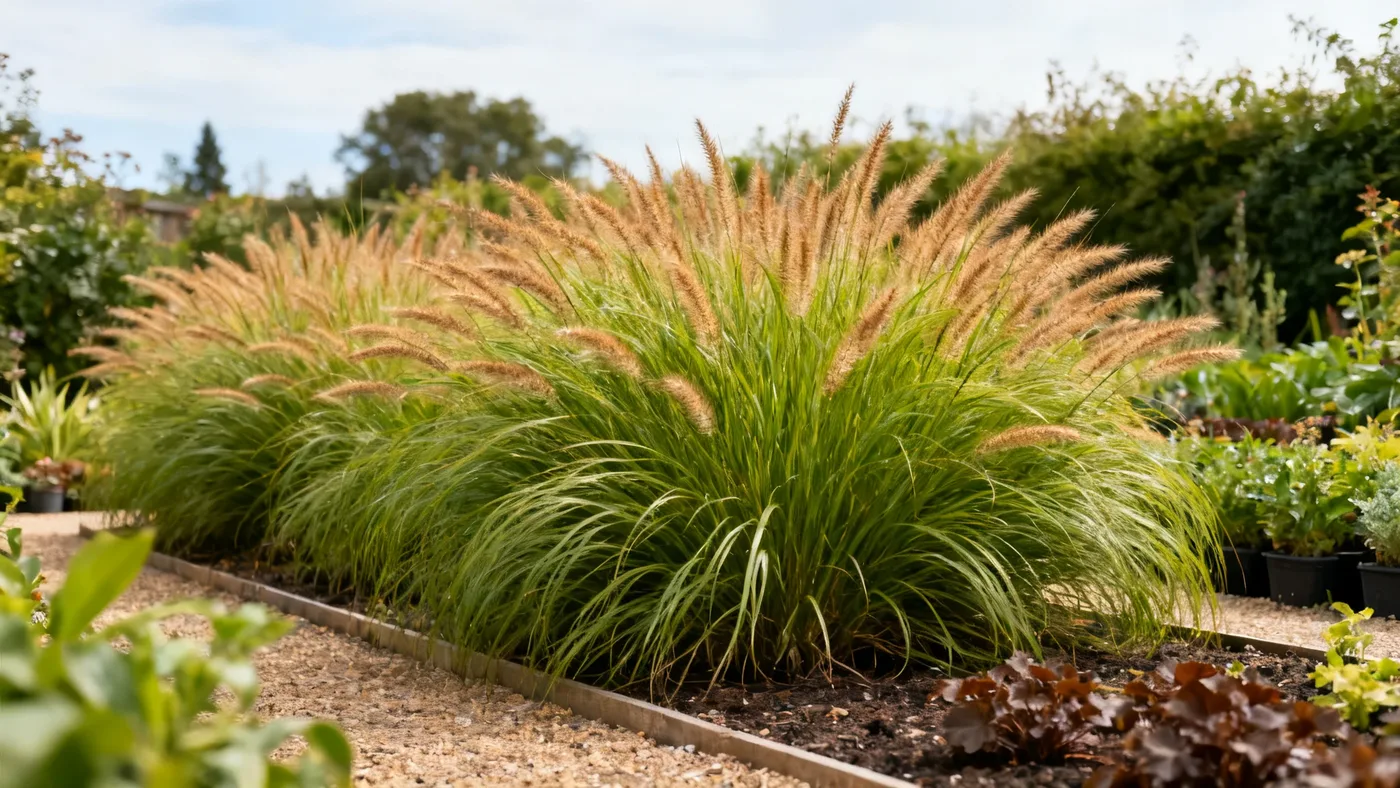
12 Landscape Ideas for Hameln Fountain Grass
Hameln Fountain Grass is a workhorse for gardeners and landscapers who want reliable, low-fuss ornamental grass that performs across most of the country. Its compact mound of fine-textured foliage and creamy white plumes deliver four-season interest without demanding much. What makes it so useful is how it slides into almost any design, from a single specimen in a small space to dozens planted in a drift. Here are 12 proven ways to use Hameln in your landscape.
1. Mass Planting for Bold Impact
Plant 12 to 20 Hameln clumps in a rectangular or curved drift across a planting bed. Space them 18 to 24 inches apart so mature plants touch without crowding. This creates a unified, flowing rhythm that reads at a distance and fills space faster than scattered specimens.
Drifts are especially effective in front of hedges, along property lines, or as a living screen between lawn and hardscape. The uniform height (18 to 24 inches of foliage, 24 to 30 inches with bloom plumes) makes them work as a low visual barrier without blocking sight lines. By mid to late summer, the soft tan plumes unify the entire mass, creating a cohesive presence that holds the eye.
Practical takeaway: Plan for full sun and well-drained soil; use 18-inch spacing for a tighter look, 24-inch spacing if your budget is tighter. Mature clumps reach full size in 2 to 3 growing seasons, so patience pays off. Mass planting for hameln fountain grass landscaping ideas is one of the most effective uses in residential and commercial settings.
2. Mixed Perennial Border Anchor
Place Hameln clumps at regular intervals through a perennial bed to break up the flower colors and provide vertical texture. The grass weaves between Echinacea (coneflower), Rudbeckia (black-eyed Susan), Sedum, and Russian sage, offering airy contrast to solid plant forms.
Hameln pairs especially well with late-blooming companions because it doesn't compete for attention. While the coneflowers and sedums are still putting on color in fall, the grass plumes have mellowed to buff and tan, stepping back gracefully. The fountain grass companion plants approach means you can densify the bed without creating a wall of color.
Practical takeaway: Use one Hameln clump per 4 to 6 square feet of border. It blooms mid to late summer through fall (roughly July through October, depending on your region), so it won't shade out spring ephemerals or early-season perennials.
3. Erosion Control on Slopes
The fine-textured, arching foliage and dense mound of Hameln catches and slows water runoff on gradual slopes. Once established, its moderate drought tolerance means it performs well in slopes that dry out between rains. Space plants 18 inches apart in rows running across the slope contour.
This is a low-maintenance erosion solution that asks less of you than groundcovers and delivers texture that changes with the seasons. The root system stabilizes soil, while the foliage absorbs impact from water and wind. Unlike turf, which needs regular mowing, Hameln needs only a single late-winter cut.
Practical takeaway: Pair slope plantings with a light mulch layer initially to hold moisture while the grass gets rooted. Once established (within one growing season), it is highly drought-tolerant and requires minimal water beyond natural rainfall in most climates.
4. Container Groupings for Patio and Entry
Hameln works well in large containers (14 to 16 inches in diameter, minimum) filled with well-drained potting soil. Group three to five containers of varying heights on a patio, stoop, or deck to create a living screen or focal point. The grass reaches mature size in containers and produces full bloom plumes by late summer.
Containers give you control over drainage and soil, which is especially useful if your native soil is heavy clay or too compacted. A quart-size container-grown Hameln will bloom its first year when planted in spring, making container arrangements fast and satisfying. The dried plumes persist through winter, providing months of visual interest.
Practical takeaway: Use containers with drainage holes and water regularly until the grass establishes (about one season). After that, it tolerates moderate drought well, making it a good choice for forgetful gardeners. It is suitable for large, well-draining containers, not windowboxes or shallow pots.
5. Xeriscape and Low-Maintenance Garden Design
Hameln is a natural choice for xeriscaping because it establishes quickly, has good drought tolerance once rooted, and rarely needs fertilizing. A spring application of balanced fertilizer is all it needs; heavy feeding causes floppy growth. Pair it with Sedum, Russian sage, and ornamental alliums to create a hardworking, handsome garden that thrives on rainfall alone in most of the U.S.
The fountain grass landscape design aesthetic here is restrained and elegant. No splashing color, just texture, movement, and seasonal shifts from green to golden tan to russet in fall. This is ideal for sites where water conservation matters or where you simply want a garden that looks good without constant tending.
Practical takeaway: Plant in USDA zones 5 through 9 for best results. Space 18 to 24 inches apart and water regularly until established (first growing season). Once established, natural rainfall supports the plant in most climates. Avoid over-watering and overly rich soil, which both trigger flopping.
6. Border and Edging Along Pathways
Line a garden path or driveway edge with a single row of Hameln, spacing plants 18 to 20 inches apart for a continuous line. The soft, arching foliage spills slightly over the path edge without becoming a trip hazard or requiring aggressive shearing. The plumes add height at the path edge and create a sense of arrival.
This is a smart hameln fountain grass border strategy because the plant's moderate size and tidy habit keep it from overwhelming walkways. Unlike taller ornamental grasses, Hameln doesn't block sightlines or require hard pruning to keep the path clear. A single winter cut (back to 3 to 4 inches) in early spring restores neatness.
Practical takeaway: Space at 18 to 24 inches apart depending on how quickly you want the line to fill in. Plan on full sun or light shade; it performs best in full sun, but tolerates partial shade if you're working with an under-eave or tree-dappled site.
7. Focal Point in Small Urban or Courtyard Gardens
A single well-sited Hameln specimen can anchor a small courtyard or pocket garden. Its mature height (18 to 24 inches, or 24 to 30 inches with plumes) doesn't overwhelm a confined space, but the movement and seasonal shift make it visually complex and interesting. Set it slightly off-center, surrounded by low-growing Sedum or ornamental alliums.
The plumes catch light and draw the eye, especially in late afternoon sun. As the light changes through the seasons, so does the grass: green through summer, creamy white plumes in mid to late summer, golden tan to russet in fall, and dried tan texture through winter. Four distinct landscape personalities in one plant.
Practical takeaway: Ensure full sun for best bloom and compact form. In partial shade, the clump may flop slightly. Plant in spring after the last frost or in early fall in mild climates. A mature specimen reaches about 18 to 24 inches wide, so allow that much space in your design.
8. Textural Contrast with Solid-Leafed Perennials
Pair Hameln with bold, architectural foliage plants like Russian sage (Perovskia), ornamental alliums, or Echinacea to create dynamic textural interplay. The fine, airy grass plumes read as lightness next to chunky or upright forms, making each plant look better by comparison. This is the designer's trick for making small spaces feel larger.
Ornamental grass landscape design at its best leans on contrast. Hameln's arching, delicate texture plays against the stiff, linear foliage of alliums or the billowy softness of Russian sage. The eye travels between plants, discovering details, rather than reading the bed as one flat wash of texture.
Practical takeaway: Choose companion plants that share Hameln's sun and water needs (full sun, average water, well-drained soil). Avoid pairing it with plants that sprawl heavily or need frequent deadheading, as those demands will undermine the low-maintenance ethos.
9. Four-Season Interest Composition
Design a small mixed bed around Hameln to deliver visual interest from spring through winter. Layer it with spring bulbs (crocuses, early alliums) that disappear by bloom time, early perennials (creeping phlox, hellebores) that pop before the grass blooms, summer companions (Rudbeckia, Sedum), and winter structure from the dried plumes and tawny foliage standing through frost.
This strategy works because Hameln doesn't demand center stage in spring or early summer. It's a supporting player until mid to late summer, when the plumes emerge and take the lead. The dried seed heads hold through January in most climates, so you get two to three months of winter texture for free.
Practical takeaway: Start with a small bed (4 feet by 6 feet) to keep the composition manageable. One or two Hameln clumps, spaced 18 to 24 inches apart, can anchor the whole bed. Add companions on a 12 to 18-inch spacing so mature plants touch without choking.
10. Wildlife Habitat and Pollinator Garden
Hameln seed heads attract birds in fall and winter, offering natural food when insects and berries are scarce. Plant it in a drift with Echinacea, Rudbeckia, native asters, and sedums to create a late-season larder for migrating species. Leave the dried plumes standing through winter; cut them back only in late winter or early spring before new growth emerges.
This is not a major pollinator plant (the flowers are wind-pollinated, not showy to insects), but it provides habitat value and structure that shelters beneficial insects. The combination of seed-bearing companions and overwintering plumes creates a food and shelter corridor that supports wildlife migration and winter survival.
Practical takeaway: Space plants generously (18 to 24 inches apart) so mature plants have room to reach full size without competition. Avoid fertilizing heavily, which triggers lush, floppy growth; light spring applications of balanced fertilizer are sufficient.
11. Deer and Rabbit-Resistant Landscape Alternative
Hameln is highly deer and rabbit resistant, making it an excellent substitute for more vulnerable perennials in rural or suburban areas where browsing pressure is high. Because it's tough against wildlife but still elegant, you can mix it confidently with other tough plants like sedums, Russian sage, and native asters without losing visual sophistication.
Many ornamental grasses are left alone by deer, but Hameln's proven performance across USDA zones 5 through 9 makes it a reliable anchor for a deer-proof planting scheme. It doesn't taste or smell appealing to browsers, so it maintains its form and fullness even in high-pressure areas.
Practical takeaway: Use Hameln as a visual bridge between unpalatable plants (sedums, coneflowers) that deer tend to avoid. This creates a cohesive landscape where everything thrives, rather than a scattered pattern of damaged and untouched plants.
12. Slope and Hillside Planting with Groundcovers
On south-facing slopes or hillsides prone to erosion, plant Hameln in staggered rows with low-growing groundcovers between the rows. Creeping sedums, creeping thyme, or ornamental evergreen groundcovers stabilize the slope, while the Hameln adds seasonal height and visual interest. Space Hameln 24 inches apart on slopes to reduce mowing pressure and maintenance.
The combination works because the groundcover holds topsoil while the Hameln's roots anchor deeper. Once established (usually within the first growing season), the slope becomes a low-maintenance feature that handles foot traffic and weather without degrading. The fall color change on the grass adds seasonal drama to what might otherwise be a monotonous slope.
Practical takeaway: Ensure good drainage on slopes. Hameln thrives in adaptable, well-drained soil and tolerates sandy or clay soils equally well, as long as water doesn't pond. Mulch lightly until established, then let the groundcover and dense planting suppress weeds.
Quick Reference: Hameln Fountain Grass at a Glance
| Feature | Specification |
|---|---|
| Mature Height | 18–24 inches (foliage); 24–30 inches with bloom plumes |
| Mature Width | 18–24 inches |
| Spacing | 18–24 inches apart |
| USDA Hardiness | Zones 5–9 |
| Sun Requirement | Full sun to light shade; best in full sun |
| Water Needs | Regular until established; then moderate drought-tolerant |
| Bloom Time | Mid to late summer through fall (July–October) |
| Bloom Color | Creamy white to tan, aging to buff |
| Fall Color | Golden tan to russet/copper |
| Time to Maturity | 2–3 growing seasons |
| Pruning | Cut back to 3–4 inches in late winter/early spring |
| Wildlife Value | Seed heads attract birds; highly deer and rabbit resistant |
| Containers | Suitable in large containers with good drainage |
For detailed guidance on planting, pruning, and long-term care, see our complete growing guide for Hameln Fountain Grass. Whether you choose mass planting, borders, containers, or mixed perennial designs, Hameln reliably delivers color, texture, and season-long interest with minimal input.