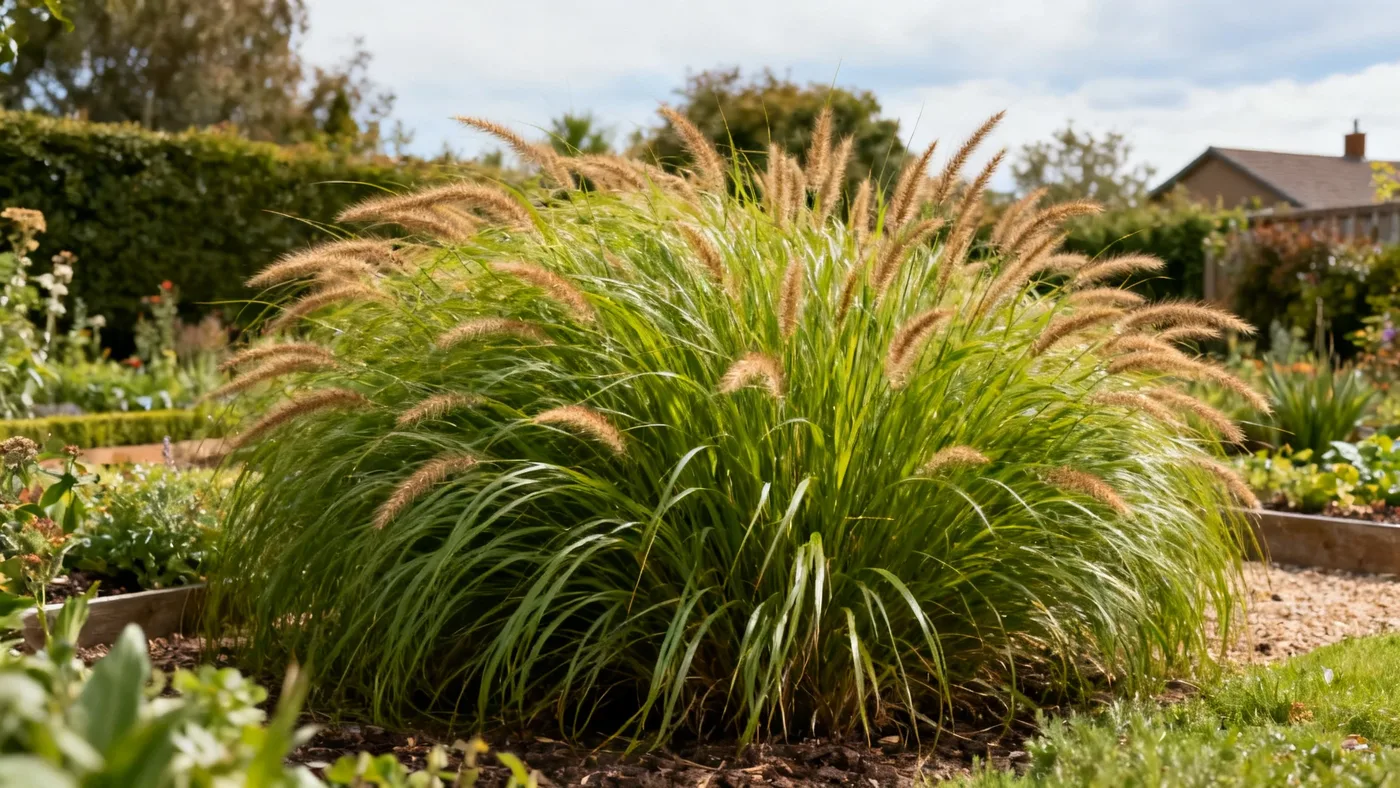
Is Hameln Fountain Grass Deer and Rabbit Resistant?
Hameln fountain grass stands out as one of the most reliable deer resistant ornamental grasses for home gardens. If you're planning a low-maintenance landscape that wildlife won't ravage, this is worth your attention. Below, we answer the most common questions about deer resistance and how to use Hameln effectively in your yard.
General Deer & Rabbit Resistance
Is Hameln fountain grass really deer resistant?
Yes. Hameln Fountain Grass is highly deer and rabbit resistant, making it one of the safest ornamental grasses to plant in areas with browsing pressure. The fine-textured foliage and arching blade structure don't appeal to deer or rabbits, even when other landscape plants are heavily grazed.
Will rabbits eat Hameln fountain grass?
Rabbits rarely browse Hameln. Like deer, rabbits prefer tender, broad-leafed plants and avoid the fine, wiry blades of fountain grass. You can rely on this grass as a rabbit-resistant border or accent without caging or barriers.
Does fountain grass deter deer from a landscape?
Hameln won't actively deter deer from entering your yard, but it will survive intact when they do. The real value is having substantial garden structure and texture that remains standing after a deer visit, unlike hostas or newly emerged perennials. Think of it as a resilient backbone for deer-resistant garden design.
How does Hameln compare to other ornamental grasses for deer resistance?
Hameln is consistently listed among the most deer-resistant grasses available. Unlike some tender grasses, it combines high palatability avoidance with architectural durability, so even if an animal brushes past it, the clump bounces back without damage.
Why It Works
Why don't deer and rabbits eat fountain grass?
Deer and rabbits prefer plants with soft, nutritious foliage. Hameln's fine-textured, arching medium green blades lack the protein content and texture that make hostas, woody shrubs, and tender perennials attractive browse. The plant simply isn't on their menu.
What is it about the texture that deters animals?
The dense mound of thin, wiry blades creates a tactile and visual barrier that doesn't encourage grazing. Herbivores evolved to eat broad leaves or tender shoots; ornamental grass blades feel like tough, unpalatable material to them.
Do young plants get eaten more than established ones?
No. Even young Hameln plants from quart-size or #1 containers are unattractive to deer and rabbits. The foliage character is consistent from the first growing season, so you don't need to protect new plantings with fencing or netting.
Landscape Strategy & Design
Can I rely only on Hameln fountain grass for deer prevention?
Hameln is excellent for mixed borders, but combining it with other deer-proof landscaping plants is the strongest strategy. Pair it with proven companions like Russian sage, coneflower, and black-eyed Susan to build a diverse, unappealing landscape to browsing wildlife.
What companion plants work well with Hameln for a deer-resistant garden?
Hameln pairs beautifully with Rudbeckia (black-eyed Susan), Echinacea (coneflower), Sedum, Russian sage (Perovskia), and Aster. All of these are deer resistant and share Hameln's love of full sun and well-drained soil, making them ideal co-plantings for a cohesive, trouble-free border.
How should I space Hameln plants for maximum animal deterrence?
Space plants 18 to 24 inches apart. This spacing allows each clump to reach its mature width of 18 to 24 inches while creating a dense visual and tactile screen that discourages animals from pushing through the planting. Tighter spacing fills faster and creates a more unified barrier effect.
Does plant placement matter for deer resistance?
Yes. Plant Hameln where it will receive full sun to light shade, with preference for full sun. Sun-loving locations produce more compact, floriferous plants with stronger structural presence, which reinforces the visual deterrent. Shadier placements can make the plant flop or thin out, potentially making it look vulnerable to browsing.
Growing Conditions & Zones
Will Hameln stay deer resistant in all USDA zones where it grows?
Yes. Hameln is hardy in zones 5 through 9, and its hameln fountain grass deer resistant traits hold across this entire range. The foliage character and palatability avoidance don't change with geography; what does change is how fast the plant matures in warmer zones and how it overwinters in colder ones.
Does sunlight affect whether deer will eat the grass?
Not directly. Deer avoid Hameln regardless of sun or light shade. However, plants grown in full sun develop a tighter, more compact mound and produce more robust bloom plumes, resulting in a stronger visual presence that psychologically discourages browsing.
Does soil type influence deer resistance?
No. Hameln is adaptable to most well-drained soils, including clay and sandy soils, and remains equally unappealing to deer across all soil types. Deer resistance is a foliage trait, not a soil-dependent characteristic.
Can I grow Hameln in a container for portable deer defense?
Yes. Hameln works well in large containers with good drainage and can be moved around the landscape seasonally. A single mature container planting (usually achieved in 2 to 3 growing seasons) adds 24 to 30 inches of height with bloom and provides a mobile accent for patios or deck edges that deer frequent.
Maintenance & Timing
Does pruning affect the deer resistance of Hameln?
No. Cut back Hameln to 3 to 4 inches above ground in late winter or early spring before new growth emerges. Pruning refreshes the plant but does not change its foliage chemistry or palatability. Pruned plants regrow with the same fine-textured, deer-resistant character.
When should I plant Hameln for best resistance right away?
Plant in spring after the last frost, or early fall in mild climates (zones 8 to 9). Newly planted Hameln establishes fastest in cool-season growth (spring and fall), and young plants are immediately unappealing to deer, so no adjustment period is needed.
How long before new plants show full deer resistance?
From the moment they're planted. Young Hameln plants from quart-size or #1 containers carry the same fine foliage and palatability avoidance as mature specimens. Deer resistance is not something that develops over time; it's inherent to the cultivar from the first growing season.
Does fertilizing make Hameln more attractive to deer?
Moderate fertilizing does not increase deer browse risk. Hameln is a light feeder; a balanced fertilizer applied once in spring is sufficient. Over-fertilizing causes floppy growth and is actually counterproductive, but even overfed plants remain unappealing to deer because foliage texture and chemistry don't change substantively.
Is there a time of year when deer are more likely to browse Hameln?
No. Because deer naturally avoid Hameln, seasonal variation doesn't change browsing risk. Harsh winters or drought stress in other years might increase pressure on neighboring plants, but Hameln's fine foliage remains off-limits even during difficult growing years.
Other Concerns & Wildlife
Are there any conditions where deer might eat Hameln?
Extreme starvation during severe winters could theoretically lead to browsing of less-preferred plants, but this is exceedingly rare for Hameln and does not occur in typical landscape settings. Under normal conditions, deer simply do not browse this grass.
What if I see damage that looks like deer browse?
If foliage is torn or stripped, the damage is more likely from rabbits on tender perennials nearby, weather stress, or mechanical damage. Inspect closely; true deer browse on non-target plants often appears as cleanly clipped branch tips, which would not occur on Hameln.
Can I combine Hameln with fencing for better deer control?
Absolutely. Hameln grows beautifully inside or outside fenced areas. If you're installing deer fencing to protect vegetable gardens or tender perennials, Hameln is an excellent unfenced companion because it needs no protection and will look lush while nearby plants inside the fence recover.
Is Hameln safe for pets if deer are a concern?
Yes. Hameln is not known to be toxic to pets or people, though seed heads can cause mechanical irritation if chewed extensively. Households with grazing horses or goats should verify locally, but for typical dogs and cats, Hameln poses no toxicity concern.
Specific Animal Behavior
Will rabbits use Hameln as cover?
Rabbits may use the dense mound for shelter, but they will not consume the foliage. If you see rabbits resting under or around Hameln, that's normal behavior and indicates a healthy microhabitat; the grass itself is not being harmed.
What wildlife benefits are there besides deer resistance?
Seed heads attract birds in fall and winter, providing valuable food during lean months. The dried tan foliage and structure also offer overwintering habitat for beneficial insects. Hameln supports wildlife while staying off the browsing menu, making it an ecologically sound choice for ornamental landscapes.
Will Hameln prevent other wildlife like groundhogs or voles?
No. Hameln's resistance applies specifically to deer and rabbits. Groundhogs and voles are not deterred by the foliage and may burrow nearby. For a complete wildlife management strategy, combine Hameln with other deterrent methods or barriers appropriate to your regional wildlife concerns.
Planting & Establishment for Best Results
What's the fastest way to establish a deer-resistant Hameln planting?
Buy nursery-grown plants in #1 or #3 containers rather than seed. These reach mature size (18 to 24 inches wide with 24 to 30 inches height including bloom) in about 2 to 3 growing seasons. A full clump planted at proper spacing (18 to 24 inches apart) will fill a border in one to two seasons and provide immediate visual and tactile impact that deer naturally avoid.
Can I grow Hameln from seed if I need many plants?
The species Pennisetum alopecuroides can self-seed, but 'Hameln' is a named cultivar and is less reliable from seed. For consistent results matching the 'Hameln' cultivar, propagation by division in early spring is more dependable than seed, and purchased transplants are the fastest route to a finished landscape.
Quick Reference: Hameln Fountain Grass Deer & Rabbit Resistance
| Trait | Details |
|---|---|
| Deer Resistance | Highly resistant; deer do not browse this grass |
| Rabbit Resistance | Highly resistant; rabbits avoid the fine foliage |
| USDA Zones | 5–9 (deer resistance consistent across all zones) |
| Mature Height | 18–24 inches (foliage); 24–30 inches with bloom plumes |
| Mature Width | 18–24 inches |
| Recommended Spacing | 18–24 inches apart |
| Sun Requirement | Full sun to light shade (full sun for best structure) |
| Soil Tolerance | Adaptable to most well-drained soils |
| Best Planting Season | Spring after last frost or early fall (mild climates) |
| Time to Maturity | 2–3 growing seasons for full clump size |
| Resistance from Transplant | Immediate; deer avoid young plants as readily as mature ones |
| Best Companion Plants | Rudbeckia, Echinacea, Sedum, Russian sage, Aster (all deer resistant) |
| Container Suitable | Yes, in large containers with good drainage |
| Toxicity to Pets | Not toxic; seed heads may cause mechanical irritation if chewed |
| Year-Round Interest | Fall color (golden tan to copper); winter seed heads attract birds |
For more detailed care information, see our complete growing guide.