Common Hameln Fountain Grass Problems and How to Fix Them
Hameln fountain grass is a low-maintenance ornamental that rarely causes headaches. But like any plant, problems can emerge when growing conditions drift or age catches up with the clump. The good news: most issues are preventable, and the ones that do show up are straightforward to fix. Here are the problems we see most often, and what to do about them.
1. Clumps Flopping or Splitting Apart
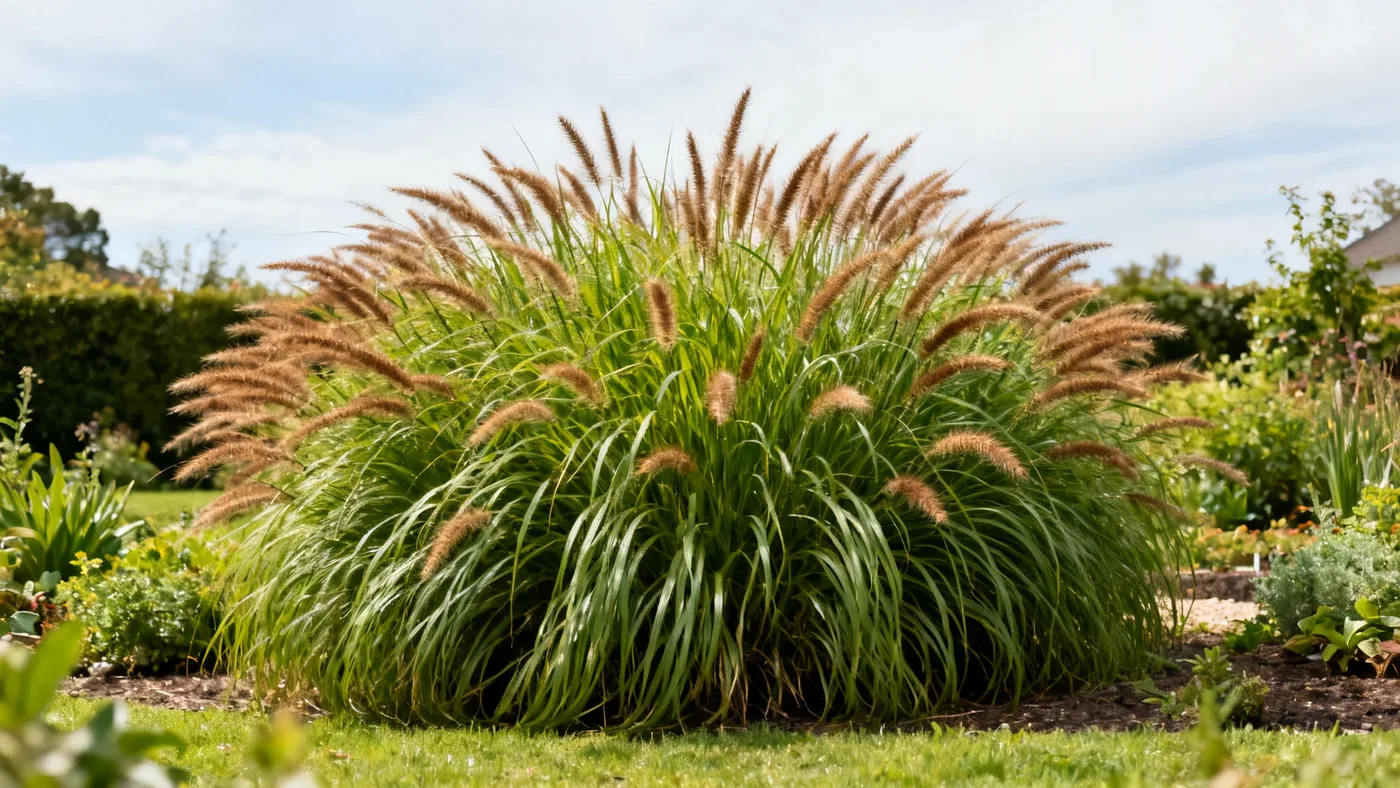
Hameln fountain grass should form a neat, upright mound 18 to 24 inches tall. When clumps start to flop outward or split in the middle, it signals one of two culprits: too much shade or soil that is too rich.
Shade is the most common cause. Hameln prefers full sun to light shade, and it reaches its best, most compact form in full sun. In partial shade or dappled light, the grass stretches toward available light, weakens its stem structure, and the clump splays open. Rich soil or over-fertilizing has a similar effect: the grass grows soft and lush rather than compact and sturdy. A balanced spring fertilizer is all it needs; avoid high-nitrogen formulas and avoid feeding repeatedly.
Fix: Move the plant to a sunnier location if possible, or reduce nearby tree shade by pruning. If the site is fixed, reduce or eliminate fertilizer and let the clump tighten up over the next growing season. Avoid staking or tying the clump together; this masks the real problem and won't solve it.
2. Dieback or Bare Center
After 4 to 6 years, it is normal for the center of a Hameln clump to thin out or die. This is not disease; it is the plant's natural aging cycle. The oldest growth in the center has exhausted itself, and the vital tissue is at the outer edge of the clump.
A bare center does not mean the plant is failing. The outer ring stays green and vigorous. However, it does signal that the clump is ready for division. Dividing every 4 to 6 years revitalizes the planting and gives you more plants to work with. Dig the entire clump in early spring before new growth emerges, split it into 2 to 4 sections with a sharp spade, and replant each section at the same depth it was growing before. Water well for the first few weeks to settle the divisions in.
Fix: Divide the clump in late winter or early spring (before new green growth appears). Each division will quickly regenerate and fill in, reaching mature size again in 2 to 3 years. Do not try to "fix" a bare center by mounding soil over it or forcing the outer edges inward; division is the only reliable remedy.
3. Fountain Grass Turning Brown Too Early
Hameln fountain grass naturally turns a beautiful golden tan to russet or copper color in fall. This happens after the first hard frost and is completely normal and desired. But sometimes the foliage turns brown or straw-colored well before autumn, and the plant looks tired or stressed all summer.
Early browning is most often caused by poor drainage or waterlogging. Although Hameln has moderate drought tolerance once established, it does not tolerate wet feet. Soggy soil for days at a time leads to root stress, which shows up as dull brown or yellowed foliage and weak growth. Check the soil after rain; if it stays soggy more than a day or two, drainage is the problem. Amend heavy clay with compost or coarse sand, or plant in a raised bed if the site cannot be improved.
Fix: Improve drainage by mixing 2 to 3 inches of compost into the planting area, or relocate the plant to a slope or raised spot. Water deeply after planting to settle the root ball, then step back and let established plants dry out between soakings. Once established, they need regular moisture only when the top inch of soil is dry.
4. Fungal Leaf Spot and Leaf Disease
Hameln fountain grass is generally disease-free, but fungal leaf spot can appear in overly wet or humid conditions. The spots are usually dark or reddish, and they spread across the blades, making the foliage look mottled or dingy.
Fungal leaf spot thrives in high humidity and poor air circulation. It is worse when leaves stay wet for hours (from overhead watering or dense planting). The disease rarely kills the plant, but it slows growth and mars the appearance. Prevention is far easier than treatment: water at the soil level only, never from overhead, and space plants at least 18 to 24 inches apart to allow air to flow through the clump.
Fix: If leaf spot appears, remove and discard infected leaves by hand. Improve air circulation by thinning nearby shrubs or moving the plant farther from walls or fences. Avoid wetting the foliage when watering. If the problem is severe and recurring, fungicide sprays (sulfur or neem) can help, but they work best when combined with better air flow and drier foliage. Do not prune the whole clump in response to a few spotted leaves; treat only the affected blades.
5. Mealybugs and Scale Insects
Hameln fountain grass rarely attracts pests. However, stressed plants can develop infestations of mealybugs or scale insects. These soft-bodied pests cluster on leaf sheaths and stems, sucking sap and weakening the plant. Mealybugs appear as white, waxy cotton-like clusters; scale insects look like small brown bumps on stems.
Infestation typically occurs when the plant is stressed from drought, overwatering, or neglect. A healthy, well-sited Hameln rarely develops pest problems. If you spot mealybugs or scale, the first step is to remove them by hand using a stiff brush or cloth and a spray of water. This alone often solves the problem. If insects return, a light horticultural oil or insecticidal soap spray can be applied to stems and leaf bases, following the product label.
Fix: Hand-remove visible insects with a damp cloth or brush. Ensure the plant is watered adequately and not oversaturated, and that it has full sun. A stressed plant is far more vulnerable to pests, so improve the growing conditions first. Repeat hand-removal weekly if needed, or use horticultural oil on a mild day. Severe infestations on single plants may warrant removal and replacement.
6. Poor Blooming or No Flowers
Hameln fountain grass should produce creamy white to tan plumes from mid to late summer through fall (roughly July through October, depending on your region). If your plant blooms little or not at all, insufficient light is the usual cause. The grass blooms reliably in full sun and much less so in partial shade.
A plant that has never bloomed may simply be too young. Container-grown plants from a nursery often bloom their first year after planting in spring. A plant grown from division reaches full blooming maturity in 2 to 3 years. A mature plant that stops blooming has likely lost sun to encroaching trees or nearby growth. Prune or move shade-casting obstacles if possible, or move the grass to a sunnier spot before the next growing season.
Fix: Ensure the plant receives 6 to 8 hours of direct sun daily. If shade is unavoidable, move the plant to a sunnier location in early spring. Do not over-fertilize, which diverts energy to foliage and away from flowers. Avoid fall pruning or deadheading; let the plumes stand through winter for best bloom next year. Pinching or deadheading in late summer can actually reduce next year's blooms.
7. Hameln Fountain Grass Not Growing or Stunted Size
Hameln is a moderate grower that reaches 18 to 24 inches tall (foliage mound) and 18 to 24 inches wide. A healthy plant planted in spring should reach roughly half that size by the end of its first year, and full mature size by year 2 to 3. If your plant is stubbornly small after a full growing season, the issue is usually one of three things: poor sun, overly dry soil in the first year, or compacted planting hole.
Established plants are drought-tolerant, but new plants need regular moisture the first year to establish roots. If you planted in spring and then neglected watering through summer, the plant never settled in and growth stalled. Compacted soil or a poorly amended planting hole can also trap the roots and prevent expansion. At planting time, dig a hole twice as wide as the root ball and amend the backfill with compost so roots can spread easily.
Fix: If the plant is young (less than one year in the ground), ensure it gets watered weekly if rain does not fall; water to a depth of 6 to 8 inches. Loosen any compacted soil around the base with a hand fork, careful not to damage roots. Move the plant to a sunnier spot if possible. If it is severely pot-bound, you may need to divide and replant sections in refreshed, amended soil. Most stunted young plants recover within one full growing season of improved care.
Quick Problem Reference
| Problem | Most Likely Cause | Quick Fix |
|---|---|---|
| Flopping or splitting clump | Too much shade, overly rich soil | Move to full sun, reduce fertilizer |
| Bare or dead center | Normal aging (4-6 years) | Divide clump in early spring |
| Early browning | Poor drainage, wet soil | Improve drainage, water at soil level only |
| Spotted or mottled leaves | Fungal leaf spot, high humidity | Improve air flow, water soil only, remove infected leaves |
| Mealybugs or scale | Plant stress | Hand-remove insects, improve growing conditions |
| No flowers or few plumes | Insufficient light | Ensure 6+ hours direct sun daily |
| Slow growth, stunted size | Poor sun, drought in first year, compacted soil | Move to sunnier site, water weekly first year, amend soil |
For a deeper dive into Hameln care year-round, see our full Hameln Fountain Grass care guide. Most problems are easy to prevent by starting with the right site and sticking to simple seasonal maintenance.