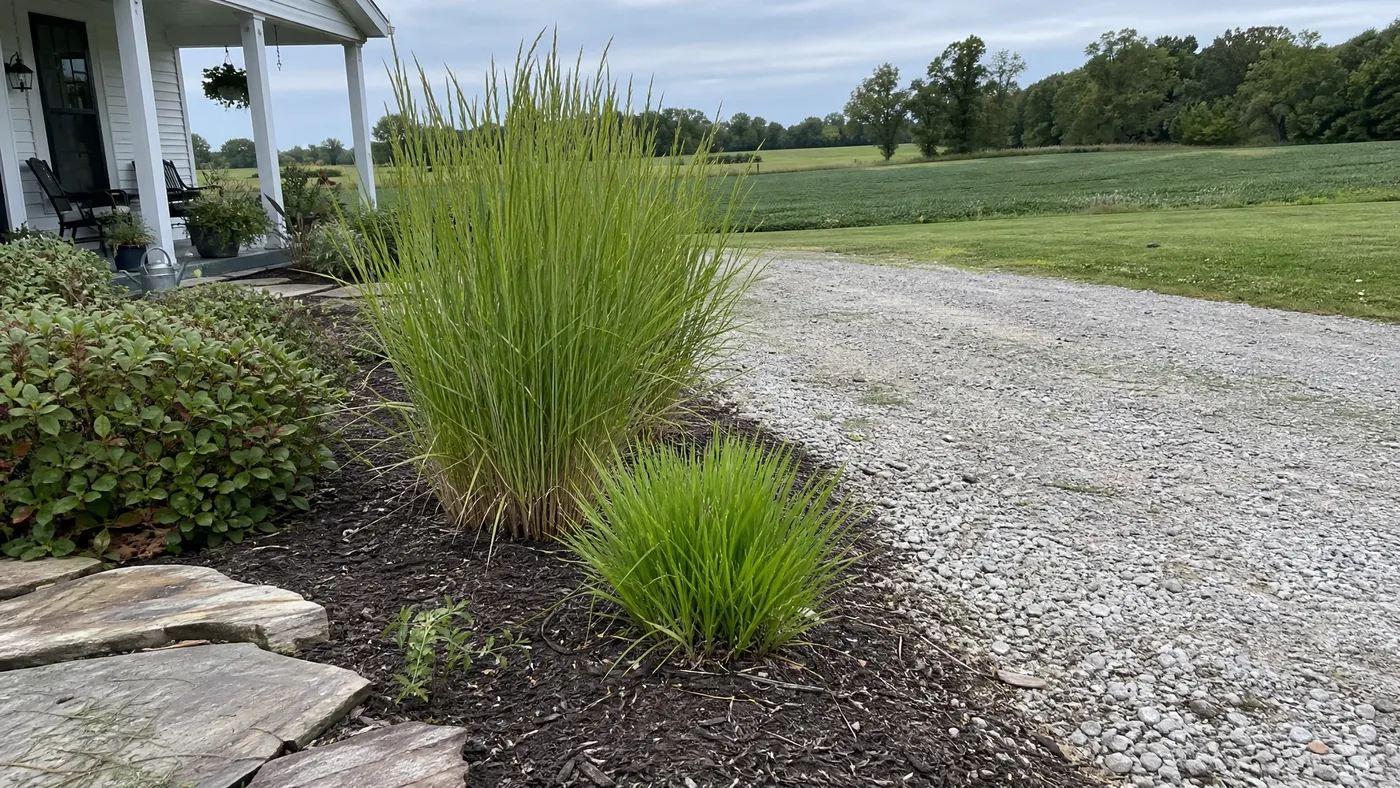
Hameln Fountain Grass vs Karl Foerster Feather Reed Grass
Hameln traces back to the fountain grasses of East Asia, where the species is known as Chinese fountain grass and thrives once the weather warms. Karl Foerster comes from a different family entirely. It is a hybrid feather reed grass of the cool-season type, and its habit reflects that. Those two origins explain almost everything about how they behave in a border.
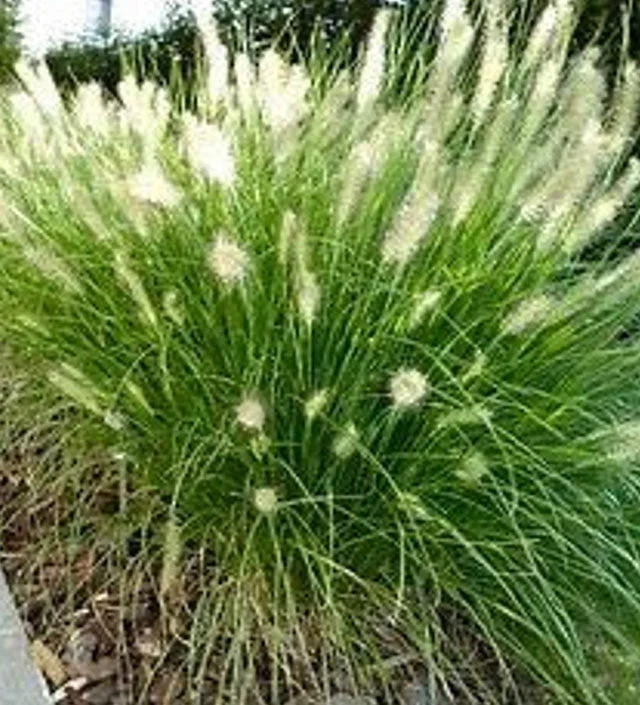
Pick the wrong one and you get a tall screen where you wanted a low skirt, or a wide mound crowding a path edge. Pick the right one and either grass gives you months of plumes with very little attention from you.
Below, you'll find out all about choosing between them, including how to measure your gap, how each handles your climate, which one we would plant and for whom, planting, the slow weeks of green-up, bloom timing, and cutting back.
Pace Off the Gap Before You Choose
Start with a tape measure, not a plant tag, because these two grasses fill opposite shapes. Hameln forms a fountain that reaches 2 to 3 feet tall and 2 to 3 feet wide, so it wants a patch about as broad as it is high. Karl Foerster is the reverse. It can grow 3 to 5 feet tall and only 1 to 1.5 feet wide, which suits a strip along a fence or the end of a bed.
The table below lines up the differences that matter when you are staring at an empty spot.
| Trait | Hameln | Karl Foerster |
|---|---|---|
| Shape | Arching mound | Upright column |
| Height | 2–3 feet | 3–5 feet |
| Width | 2–3 feet | 1–1.5 feet |
| Season type | Warm-season, wakes late | Cool-season, leafs out early |
| Plumes | Mid to late summer | Early to mid-summer |
| Seedlings | Sources differ, see below | Sterile |
The shapes also change what lives around them. A mound shades the soil at its base and spills over the edges, which leaves little bare ground for weeds and gives insects a sheltered, shaded floor to work in. A column lets light reach the soil beside it, so low perennials can fill in at its feet.
If you need help with the numbers, our notes on how big Hameln really gets and spacing for borders and mass plantings cover the mound side. Measure width as carefully as height, since width is where most mistakes with the mound happen.
Where Hameln Fountain Grass Wakes Up Late
Season type is the biggest difference between the two, and it comes straight from where each grass evolved. Cool-season grasses like Karl Foerster put on growth in cool, damp weather and slow down when summer turns hot. Warm-season grasses like Hameln do the opposite. They sit quiet through early spring and then grow fast once the soil warms.
Hot, Wet Summers
That matters most in a hot, humid year. Karl Foerster suffers in hot, humid or wet summers and is susceptible to rust. Hameln, in contrast, has no pests or diseases of major concern.
We often tell customers with humid summers that this one fact settles the question before size even enters it. A grass that looks tired by August is not what most people want from a plant they were promised would be easy.
Cold Winters
Hardiness runs the other way at the cold end. UF/IFAS lists Hameln for zones 5 through 8, so check the top of that range against your winters. Our page on where Hameln thrives goes into the edges of that range.
For Karl Foerster we point you to your local extension service, because the sources we trust for this guide do not give a zone range. What we can say is that a cool-season grass does best where summers stay mild, so the same climate question applies in reverse.
Matching Each Grass to Its Job
Here is where we land. For most mixed borders, front-of-bed edges and any spot with hot summers, we would plant Hameln. It stays at a manageable 2 to 3 feet, it handles heat, and it is highly resistant to deer grazing. It asks for almost nothing once it is in the ground.
We would choose Karl Foerster for a different job: a narrow bed, a vertical accent, or a living screen where you want height without width. Its stalks go up early and stay upright through winter, so it holds a line in the garden when most perennials have collapsed. In a cool-summer climate that is a real strength, and nothing in Hameln's habit can replace it.
One of the most common questions we get is which grass to put along a fence on a tight strip of soil. That one is Karl Foerster, every time, because a Hameln mound would push out past the edge of the bed. Common advice calls Karl Foerster the bulletproof grass, but the rust risk in humid summers means that only holds where summers are mild.
The two also work together. A few Karl Foerster stalks at the back and Hameln mounds in front put a column and a fountain in one bed. Our guide to companion plants for Hameln has ideas for the plants in between.
Plant Hameln Fountain Grass in Full Sun
Both grasses are easy to establish, and the steps are nearly the same. Hameln grows best in full sun but tolerates part shade. It also tolerates acidic and alkaline soils, so you rarely need to amend the pH. Pick the sunniest spot you have for either grass, and keep the soil open enough that water does not sit around the crown.
- Loosen the soil in an area wider than the root ball so roots can spread into it easily.
- Dig a hole as deep as the root ball and set the plant so the crown sits level with the surrounding soil.
- Backfill with the soil you dug out, firm it gently and water slowly until the whole root zone is wet.
- Space plants by their mature width: roughly a mound's width apart for Hameln, much closer for the slender Karl Foerster.
- Water through the first season whenever the soil dries out, then let established clumps look after themselves.
Avoid burying the crown or piling mulch against the stems, which invites rot in either plant. A shallow, wide planting area suits both, because fine grass roots spread outward more than they dive.
The planting window follows the season type too. A warm-season grass like Hameln settles in best once the soil has warmed, while a cool-season grass like Karl Foerster can go in earlier in spring. Your local extension service can give you dates that suit your area. For more detail on Hameln specifically, see how to plant Hameln for a strong start.
Waiting Out the Green-Up
This is the stage where gardeners lose confidence. Karl Foerster leafs out early, and fresh green blades show while the rest of the garden is still bare. Hameln stays brown and silent far longer, and in spring we often see customers worry that a clump has died when it is only waiting for warm soil.
Our advice is to leave it alone. Do not dig, do not fertilize to coax it, and do not give up before the weather has warmed for a few weeks. New growth appears from the base of the clump, so if you scratch gently and find firm, pale tissue, the plant is alive.
The gap can be turned to your advantage. Because Hameln wakes late, early bulbs and spring perennials around it get their moment before the mound takes over. Plant them close to the clump and the fresh blades will rise through their fading foliage.
Karl Foerster has the opposite pattern. Its early growth is easy to crowd with vigorous neighbors, so give it a little space around the base for air movement, which helps keep leaf diseases in check. Early green blades also mean this grass looks finished in your border weeks before Hameln does.
How Hameln Fountain Grass Blooms Against the Spikes
The bloom windows barely overlap. Karl Foerster comes first, with plumes that appear on an upright stalk in early to mid-summer, around early June. The flower heads open green, then turn airy and pinkish-purple. Because the stalks are so narrow, the effect is of vertical lines rather than a mass of color.
Hameln follows later, with cylindrical panicles of bristly, purple-tinged spikelets in late summer, and it can flower in both summer and fall. This cultivar blooms about two weeks earlier than other fountain grasses, which is a useful edge in cooler regions where fall frost can cut a season short. Our bloom time guide covers the timing in more detail.
Both plumes earn their keep after the show. Karl Foerster's flower stalks stay upright throughout the winter, and Hameln's seed heads can stand too. Left in place, they give birds and insects something to use in cold months, and frost makes them look better still.
Seedlings are the one place where the sources disagree. UF/IFAS says Hameln, unlike the species, does not re-seed. NC State, in its entry for the species, says Hameln can self-seed aggressively. Our advice is to cut the plumes before the seed heads break apart if stray seedlings would bother you. Karl Foerster, being sterile, never raises the question.
Cutting Each Grass Back
The final job is the same for both, but the timing is not. Cool-season grasses like Karl Foerster should be cut back in early spring, leaving about a third of the plant. Doing it then lets you enjoy the upright stalks all winter and trims before the new blades are tall enough to get nicked.
Hameln follows the warm-season pattern. We cut it low in late winter, before the new shoots start, and then leave it alone while it slowly wakes. The one rule that applies to both is not to cut so early that you lose the winter shape, and not so late that you slice into fresh growth.
Both grasses give you a long standing display of seed heads and dry foliage, which is part of why we like them. Wait until the garden has had its winter use out of them before you reach for the shears. A sharp pair of hedge shears or pruners makes the job a few minutes per clump.
Because Hameln is a mound, you can gather the blades with one hand and cut in a single pass. Karl Foerster's stalks are tall and stiff, so tie the bundle first and the cut-off stays tidy for the compost. If you want to see exactly how to cut Hameln, our guide to when and how to cut back Hameln walks through it step by step.
Hameln Fountain Grass for the Easy Spot
If you want one grass that tolerates heat, ignores deer and forms a tidy mound for years, Hameln is the one we choose for most borders. If you need height in a narrow space and your summers stay mild, Karl Foerster does a job nothing else does as well. Measure the gap first, since that decision usually makes itself.
Whichever you pick, plant it in full sun, resist the urge to fuss in spring, and cut it back once a year. Their shapes and bloom windows are different enough that, in a bed with room, the best answer can be both.
Hameln Fountain Grass
Nursery-grown Hameln Fountain Grass in sizes from Quart Plant, shipped to your door.
From $49.49
Shop Now →Hameln does best for us out on the farm when it gets a full day of sun and a gritty, fast-draining bed, and we keep its yearly routine simple. We grow and sell top-quality grasses we raise ourselves, so whether your border has room for a mound of Hameln, a tall column of Karl Foerster or both, you can begin with a Hameln from our shop.