Hameln Fountain Grass vs Purple Fountain Grass: Key Differences
At a Glance: The Core Difference
Choosing between Hameln fountain grass and purple fountain grass really comes down to one thing: hardiness. Hameln is a hardy perennial that overwinters outdoors in zones 5 through 9. Purple fountain grass is tender and treated as an annual in most climates. That single fact reshapes everything about maintenance, lifespan, and seasonal performance.
If you're in zone 5 or colder, or you want a perennial that asks nothing of you come winter, the fountain grass comparison almost always favors Hameln. If you live in a warm climate or enjoy the ritual of replanting for summer color, purple fountain grass offers drama that Hameln cannot match. Let's break down what each delivers.
| Attribute | Hameln Fountain Grass | Purple Fountain Grass |
|---|---|---|
| Hardiness | USDA zones 5–9 (perennial) | Tender; annual in most zones |
| Mature Height | 18–24 in. (foliage); 24–30 in. (with plumes) | Taller; consult local nursery |
| Foliage Color | Medium green, fine-textured | Deep red, burgundy, or purple |
| Bloom Color and Time | Creamy white to tan plumes; July–October | Red or burgundy plumes; summer through fall |
| Fall Color | Golden tan to russet/copper | Foliage maintains color until frost |
| Winter Interest | Dried foliage and plumes stand through winter | Dies back after frost; no winter structure |
| Growth Rate | Moderate; full size in 2–3 seasons | Fast growing in warm months; annual cycle |
| Replanting | No (perennial) | Yes, each spring (in zones 5–9) |
| Sun Requirement | Full sun to light shade | Full sun preferred |
| Deer Resistant | Highly resistant | Varies; check local experience |
Hardiness: The Make-or-Break Factor
Here's where the question "is purple fountain grass hardy?" gets its answer. Purple fountain grass (Pennisetum setaceum or its burgundy cultivar Rubrum) is not hardy in most climates. It survives winter outdoors only in USDA zone 10 and warmer. In zones 5 through 9, you have two options: replant it each spring as an annual, or dig up the clump in fall, pot it, and overwinter it indoors before returning it outdoors in late spring.
Hameln, by contrast, survives dormant winters in zones 5 through 9. Plant it once, cut it back to 3 to 4 inches above ground in late winter or early spring, and watch it emerge on its own schedule. If you garden in zone 4 or colder, Hameln is your option. Purple fountain grass simply will not survive.
This matters more than it sounds. Annual replanting means buying new plants, digging holes, amending soil, and waiting for the grass to fill in. A perennial Hameln clump reaches full size in 2 to 3 seasons and then sits there, year after year, asking for little beyond basic maintenance.
Size and Garden Fit
Hameln is deliberately compact. It grows to 18 to 24 inches tall in foliage, and 24 to 30 inches when the plumes appear. Space plants 18 to 24 inches apart. This small stature makes it ideal for borders, edging, small perennial beds, and containers. You're not managing an oversized specimen that sprawls across half the garden.
Purple fountain grass typically grows taller, especially in regions with long, warm growing seasons. The exact height depends on the cultivar and your zone, so check with your local nursery before buying. If you want a dramatic, eye-catching focal point that commands attention, purple fountain grass has the height. If you need something that plays well in tight spaces, Hameln wins the fountain grass comparison.
Color and Seasonal Performance
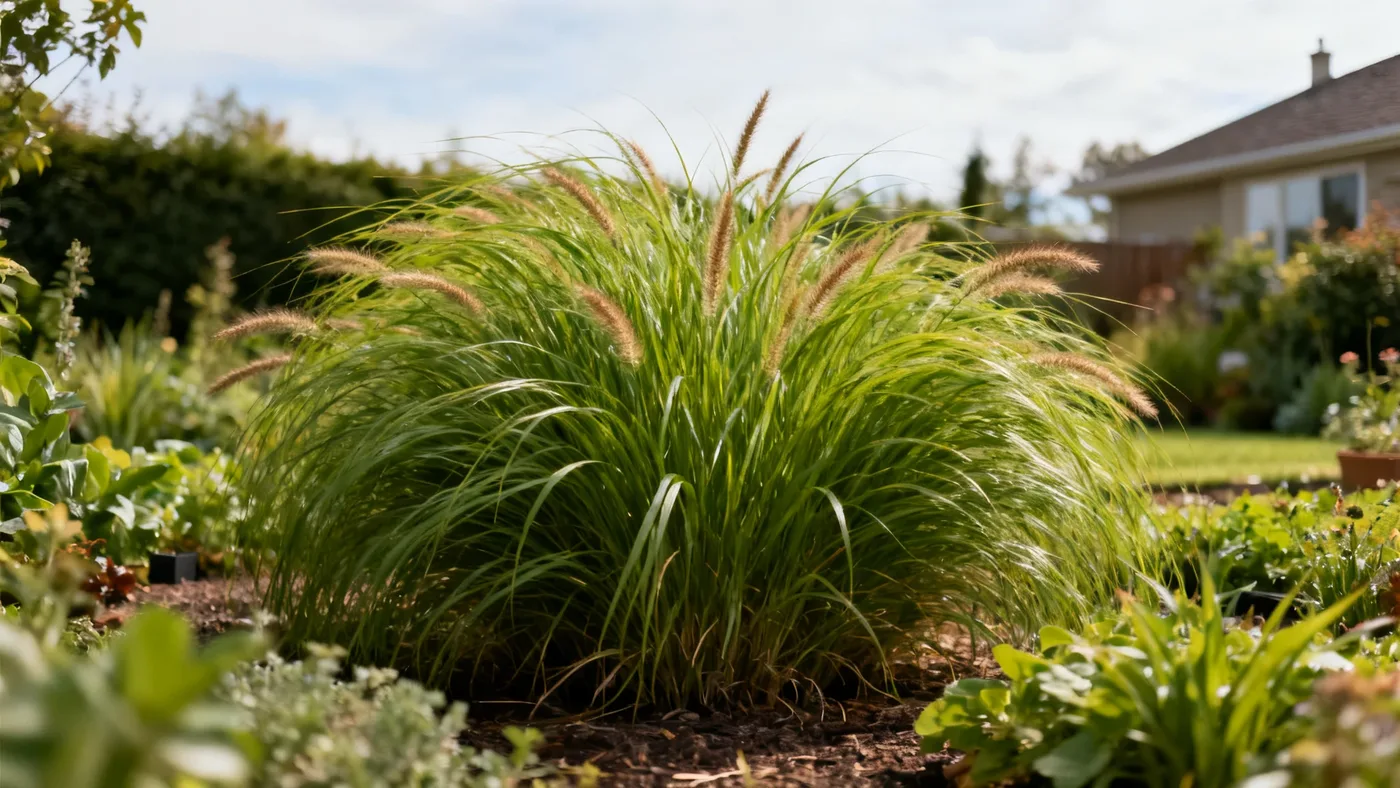
Hameln fountain grass has medium green, fine-textured foliage that forms an airy mound. The plumes are creamy white to tan or light pink, aging to buff and tan as the season progresses. Come fall, the foliage turns golden tan, russet, or copper. Most importantly, those dried plumes and bronzed foliage persist through winter, providing textural interest when the garden is otherwise dormant. In cold climates, that winter structure is a real asset.
Purple fountain grass exists for a single reason: color drama. Deep red, burgundy, or purple foliage (depending on cultivar; Rubrum is the classic burgundy selection) creates impact that no other grass matches. The plumes coordinate with the foliage, extending the color show into late summer and early fall. But here's the catch: once frost arrives, everything blackens and dies. There's no winter structure, no dried seedheads catching the light, no reason to leave it standing. The visual payoff is concentrated in warm months.
This is why the best fountain grass variety for your garden depends on what season matters most. Hameln rewards you year-round. Purple fountain grass is a summer and early-fall performer.
Growing Conditions and Care
Both grasses love full sun. Hameln tolerates light shade, though it blooms best and keeps a tighter, more compact habit in full sun. Purple fountain grass demands full sun to develop its richest color.
Hameln is remarkably adaptable. It grows in most well-drained soils, including clay and sandy soils, with a soil pH around 6.0 to 7.5. Once established, it has good drought tolerance and moderate salt tolerance. You can plant it and largely forget about it.
For purple fountain grass soil and water preferences specific to your cultivar and region, consult your local extension service or nursery, as these vary significantly by climate.
Pros and Cons by Variety
Hameln Fountain Grass: The Strengths
- Hardy perennial in zones 5–9; no replanting required
- Compact size fits borders, small beds, and containers
- Winter-long dried foliage and plume interest
- Truly low maintenance once established
- Grows in clay, sand, and most soil types
- Good drought tolerance after establishment
- Highly resistant to deer and rabbits
- Reaches full mature size in just 2–3 growing seasons
Hameln Fountain Grass: The Limitations
- Green foliage and tan plumes lack the color punch of purple varieties
- Can flop or split if grown in heavy shade or overly rich soil
- Center of clump may die out after 4–6 years; benefits from division
- Smaller stature than some ornamental grasses
Purple Fountain Grass: The Strengths
- Stunning deep red or burgundy foliage and plumes
- Fast growing during the warm season
- Bold visual impact in mixed borders or specimen plantings
- Excellent for warm-climate gardens where it overwinters
- Perfect for annual color gardening and containers
Purple Fountain Grass: The Limitations
- Tender; dies outdoors in zones 5–9 without protection
- Requires replanting each spring or overwintering indoors
- No winter interest or structure
- Additional cost and labor every growing season
- May self-seed and spread in warm climates (check local regulations)
Best Fit: Use Cases and Recommendations
Plant Hameln fountain grass if:
- You live in zones 5–9
- You want a perennial you set and forget
- You garden in zone 4 or colder (it's your only option)
- You need a compact plant for tight spaces or edging
- Winter texture and interest matter to you
- You prefer low-maintenance, adaptable plants
- Deer pressure is high in your area
Plant purple fountain grass if:
- You live in zone 10 or warmer year-round
- You're willing to replant each spring or overwinter indoors
- You want maximum summer and early-fall color drama
- You garden in containers and can move tender plants seasonally
- You value peak-season visual impact over year-round structure
- You enjoy the annual ritual of refreshing beds with tender perennials
The Verdict: Which Is the Best Fountain Grass Variety?
For most home gardeners in zones 5 through 9, Hameln fountain grass is the smarter choice. It's hardy, compact, adaptable to various soils, and genuinely low maintenance. You plant it once, cut it back in early spring, and enjoy reliable growth and winter interest year after year. There are no annual replanting costs, no overwintering logistics, no spring digging. The best fountain grass variety for a permanent, easy-care landscape is Hameln, every time.
Purple fountain grass earns its place in warm climates where it overwinters naturally, or in the gardens of people who love tender perennials and don't mind the annual replanting dance. It's also a smart pick for container gardeners willing to move plants indoors come winter. The dramatic color is real, but so is the labor.
In the hameln vs rubrum fountain grass debate (or hameln vs any purple cultivar), Hameln wins on durability and ease. Purple wins on pure color drama. Choose based on your zone, your maintenance appetite, and whether you need permanent structure or seasonal pop.
For complete growing instructions, see our guide to Hameln fountain grass care.
Quick Reference
| Consideration | Hameln | Purple |
|---|---|---|
| Zone 5 or colder? | Yes (5–9) | No (tender) |
| Perennial (no replanting)? | Yes | No (annual in zones 5–9) |
| Compact size for borders? | Yes (18–24 in.) | Usually taller |
| Winter-long interest? | Yes (dried foliage and plumes) | No (dies at frost) |
| Dramatic foliage color? | Green to golden/rust | Deep red/burgundy |
| Low maintenance? | Yes | No (annual labor) |
| Best for perennial beds? | Excellent choice | Treat as seasonal annual |
| Best for warm climates? | Good option | Better option if hardy there |